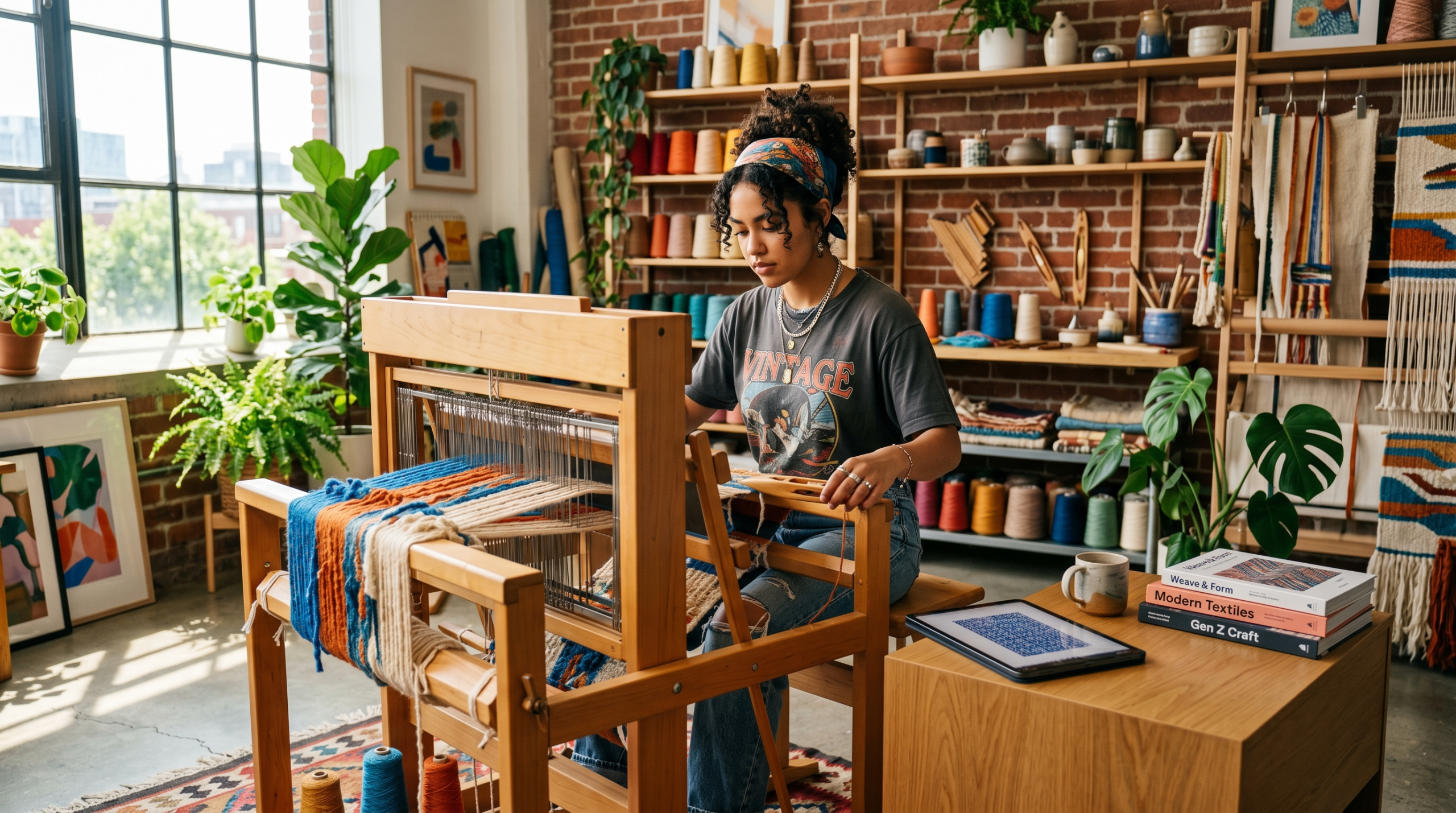
Discover Why Gen Z Is Reviving Traditional Crafts and how knitting, crochet, embroidery, sustainable fashion, digital detox habits, and handmade creativity are reshaping culture, wellness, and self-expression across America.
Why Gen Z Is Reviving Traditional Crafts: The Surprising Return of Handmade Creativity
Not long ago, many people viewed traditional crafts as hobbies reserved for older generations. Activities such as knitting, crochet, crocheting, embroidery, pottery, weaving, and other forms of handicrafts were often associated with grandparents rather than young adults. Today, however, a remarkable transformation is taking place.
Across the United States, Gen Z is leading a powerful craft revival. From viral videos on TikTok to inspirational Pinterest boards, young creators are embracing handmade skills with enthusiasm. Whether they are using knitting needles, experimenting with crochet hooks, creating colorful garments, or exploring punch needle art, these young makers are redefining what creativity looks like in the digital age.
The question many people are asking is simple: Why Gen Z Is Reviving Traditional Crafts?
The answer goes far beyond nostalgia. Today’s young generation is searching for authenticity, sustainability, mental wellness, self-expression, and meaningful connections. In a world dominated by screens, algorithms, and mass production, traditional crafts offer something refreshingly human.
This article explores the cultural, social, environmental, and economic reasons behind this fascinating movement and explains why traditional crafts may become one of the defining lifestyle trends of the decade.
The resurgence of handmade hobbies isn’t happening by accident.
Young Americans are increasingly rejecting passive consumption and embracing active creation. Instead of endlessly scrolling through social media feeds, many are choosing activities that produce tangible results.
The Great Craft Revival: Understanding Why Gen Z Is Reviving Traditional Crafts
This growing hobby revival reflects larger cultural changes:
- Desire for authenticity
- Need for creativity
- Growing environmental awareness
- Increased focus on mental health
- Interest in sustainable lifestyles
- Search for meaningful hobbies
- Appreciation for artisan skills
For many young makers, creating something with their own hands provides a sense of accomplishment that digital experiences often fail to deliver.
Traditional Crafts Are Becoming Modern Again
One of the most interesting aspects of this movement is how old crafts are being reinvented for modern audiences.
Today’s crafters combine centuries-old techniques with contemporary aesthetics.
Examples include:
| Traditional Craft | Modern Adaptation |
| Knitting | Trendy oversized sweaters |
| Crochet | Fashion-forward tops and accessories |
| Embroidery | Clothing customization and visible mending |
| Pottery | Minimalist home décor |
| Weaving | Modern wall art |
| Calligraphy | Digital branding and journaling |
| Hand-carved sculptures | Contemporary interior design |
Why Sustainability Is Driving the Craft Revival
Rather than simply preserving the past, Gen Z is actively transforming traditional crafts into a modern form of artistic expression.
The Rise of Slow Fashion
Perhaps the most influential reason behind the resurgence of traditional crafts is the rise of slow fashion.
Young consumers are increasingly aware of the environmental cost of modern clothing production.
The global fashion industry faces criticism for:
- Excessive waste
- High carbon emissions
- Massive water consumption
- Exploitation of garment workers
- Growth of synthetic clothing
- Unsustainable production cycles
As awareness grows, many Gen Z consumers are rejecting fast fashion and embracing sustainable fashion alternatives.
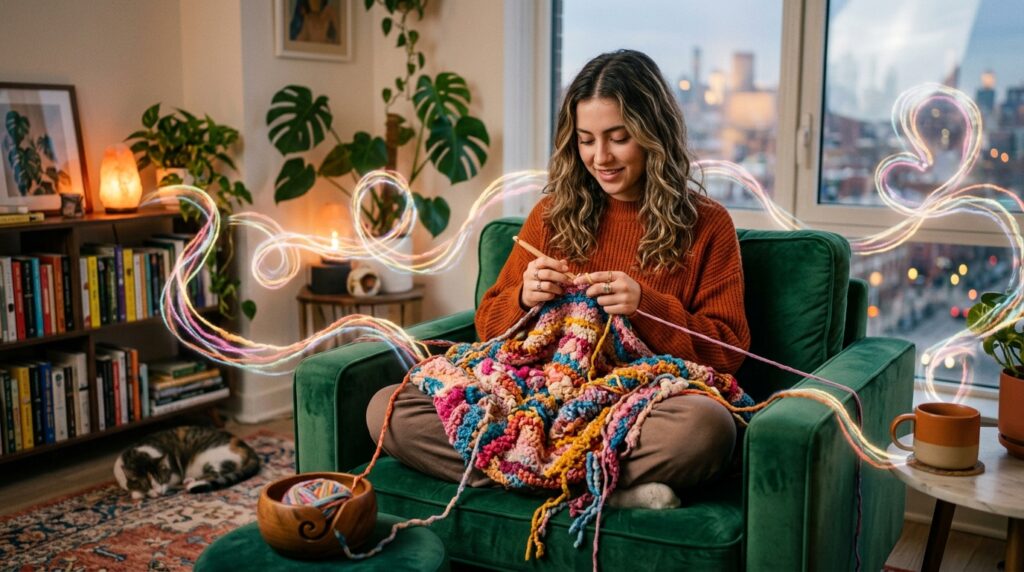
This shift has created strong interest in:
- Slow fashion knitting
- Handmade garments
- Clothing repair
- Upcycling
- Visible mending
- DIY fashion
Creating your own clothing allows complete control over materials, quality, fit, and design.
Handmade Clothing Creates Emotional Value
One major difference between fast fashion and handmade fashion is emotional connection.
When someone spends weeks creating a sweater using yarn, hundreds of stitches, and carefully selected colors, that finished piece becomes much more than clothing.
It becomes:
- A creative achievement
- A personal story
- A reflection of identity
- A symbol of craftsmanship
This sense of ownership aligns perfectly with Gen Z’s preference for authenticity and individuality.
Unlike mass-produced garments, handmade clothing often carries emotional significance.
The Popularity of Handmade Fashion
Across social media platforms, handmade fashion has become increasingly visible.
Young creators proudly showcase:
- Crochet tops
- Handmade cardigans
- Colorful accessories
- Custom sweaters
- Upcycled denim jackets
- Decorative embroidery projects
Many fashion enthusiasts now view handmade pieces as wearable art.
The popularity of street style fashion featuring handmade elements demonstrates how traditional skills are influencing contemporary design.
Even Hollywood celebrities have helped bring attention to handmade trends, further increasing their mainstream appeal.
How Knitting and Crochet Became Symbols of Sustainable Living
The Crochet Trend and Knitting Trend Explained
The modern crochet trend and knitting trend represent much more than crafting.
They symbolize:
- Sustainable consumption
- Mindful living
- Creative independence
- Personal expression
- Environmental responsibility
For eco-conscious consumers, making clothing by hand directly challenges the culture of overconsumption.
Instead of buying disposable fashion items, makers invest time and skill into producing durable products.
This approach supports:
- Eco-conscious fashion
- Circular fashion
- Sustainable living
- Conscious consumption
Why Yarn Selection Matters
Modern crafters are highly educated about materials.
Today’s makers carefully consider:
- Fiber source
- Durability
- Sustainability
- Ethical production
- Texture
- Environmental impact
Popular materials include:
- Extrafine merino wool
- silk
- alpaca
- Organic cotton
- Bamboo blends
These luxury fibers provide comfort while supporting sustainable production goals.
Understanding Modern Yarn Types
The yarn market has evolved dramatically.
Today’s creators have access to:
| Yarn Type | Benefits |
| Hand-dyed yarn | Unique appearance |
| Semi-solid yarns | Rich tonal depth |
| Variegated yarn | Dynamic color transitions |
| Speckled yarn | Playful texture |
| Gradient yarn | Smooth color shifts |
| Machine-washable yarn | Easy maintenance |
| Chunky yarn | Quick projects |
Modern yarns allow unprecedented levels of customization and creativity.
Color Theory and Artistic Expression
Today’s crafters approach projects like artists.
Many actively study:
- Color theory
- Hue
- Saturation
- Value
- Color palettes
Popular trends include:
- Earthy tones
- Vibrant neons
- Soft pastels
- Nature-inspired combinations
The growing popularity of hand-dyed yarns and unique color stories allows creators to produce highly personalized designs.
This focus on aesthetics appeals strongly to the Creative DIY Enthusiast persona.
Why Gen Z Loves Handmade Fashion More Than Mass Production
Individuality Matters
One defining characteristic of Gen Z is the desire for individuality.
Mass-produced products often feel generic.
Handmade products offer:
- Personalization
- Customization
- Creative freedom
- Originality
No two handmade projects are identical.
Even when two people follow the same pattern, differences in:
- Yarn
- Stitch tension
- Color choices
- Design modifications
ensure unique outcomes.
This uniqueness strengthens personal identity and self-expression.
Handmade Garments Tell Stories
Every handmade project reflects decisions made by its creator.
Whether someone is creating:
- Handmade sweaters
- Handmade accessories
- Knitting projects
- Crochet projects
the process becomes part of the finished product’s story.
This narrative quality contributes to the growing appeal of handmade aesthetics and artisanal fashion.
The Role of Social Media in the Handmade Revolution
While traditional crafts are centuries old, modern technology has accelerated their growth.
Platforms like:
- TikTok
- YouTube
have transformed how people learn and share creative skills.
Young creators can now access:
- Free patterns
- Online crafting tutorials
- Video tutorials
- Project inspiration
- Crafting communities
with a single click.
Ironically, the internet has helped preserve traditional skills.
Social Media Makes Crafting Accessible
In previous generations, learning a craft often required:
- Family instruction
- Formal classes
- Local guilds
- Community workshops
Today, beginners can learn:
- Their first chain stitch
- Their first knit row
- Basic embroidery techniques
- Yarn crafting fundamentals
through short-form educational content.
This accessibility has dramatically lowered barriers to entry.
Influencers Are Inspiring a New Generation
Many craft-focused influencers have built large audiences by sharing:
- Tutorials
- Creative projects
- Beginner guides
- Product reviews
- Behind-the-scenes crafting sessions
Their content demonstrates that traditional skills can feel modern, stylish, and relevant.
For Gen Z, crafting is no longer viewed as old-fashioned.
Instead, it has become part of a broader movement centered around creativity, sustainability, and personal expression.
Why Gen Z Is Reviving Traditional Crafts as a Digital Detox
One of the strongest explanations for Why Gen Z Is Reviving Traditional Crafts is the growing desire to escape constant digital stimulation.
Gen Z is the first generation to grow up entirely surrounded by smartphones, social media platforms, streaming services, and endless notifications. While technology offers incredible convenience, it has also created new challenges.
Many young adults report:
- Social media fatigue
- Information overload
- Reduced attention spans
- Increased stress levels
- Difficulty concentrating
- Digital burnout
As a result, many are intentionally seeking screen-free activities that encourage focus, patience, and creativity.
Traditional crafts provide exactly that.
Whether someone is practicing knitting, crochet, embroidery, pottery, or weaving, crafting demands full attention and engagement. Unlike scrolling through feeds, handmade activities produce a sense of progress and accomplishment.
This movement aligns perfectly with the rise of:
- Digital wellbeing
- Mindful hobbies
- Slow living
- Creative wellness
- Conscious creativity
For many young makers, crafting has become a powerful antidote to digital overload.
Crafting Encourages Mindful Living
Modern life often feels rushed.
Many Gen Z individuals are actively rejecting hustle culture and embracing slower, more intentional lifestyles.
Traditional crafts naturally support this shift because they require:
- Patience
- Repetition
- Focus
- Presence
Unlike digital entertainment, crafting rewards consistency rather than instant gratification.
Each row of stitches, every completed chain stitch, and each successful knit row creates a visible sense of progress.
This repetitive process encourages:
- Reflection
- Relaxation
- Mindfulness
- Emotional regulation
As a result, many young adults view crafting as a practical form of self-care.
The Connection Between Traditional Crafts and Mental Wellness
Crafting as Mindful Meditation
Scientific research increasingly supports what many crafters have known for years: creative activities can positively affect mental health.
Many people describe mindful crafting as a form of mindful meditation.
When working with yarn, fabric, clay, or thread, attention shifts away from stressors and toward the present moment.
The rhythmic nature of crafting helps create:
- Calmness
- Emotional balance
- Improved focus
- Reduced anxiety
This is one reason why the Mental Wellness Crafter persona has become such an important segment within the craft revival.
For these individuals, crafting is not merely a hobby—it is a wellness practice.
How Traditional Crafts Support Emotional Wellbeing
Traditional crafts contribute to wellbeing in several ways:
Sense of Accomplishment
Completing a project provides measurable achievement.
Whether it’s:
- A crochet scarf
- A knitted sweater
- Handmade home décor
- Decorative embroidery
the finished project serves as evidence of personal growth and skill development.
Reduced Stress
Crafting can help lower stress by encouraging concentration and repetitive movement.
Activities such as:
- Knitting
- Crocheting
- Stitching
- Pottery
promote relaxation while reducing mental clutter.
Increased Confidence
Each completed project builds:
- Creative confidence
- Skill development
- Self-expression
Young makers often experience increased self-esteem as their abilities improve.
Purpose and Meaning
Many people struggle to find meaningful hobbies in a highly digital environment.
Crafting provides:
- Purpose
- Structure
- Achievement
- Personal fulfillment
These benefits explain why many participants describe crafting as life-changing.
Why Creativity Matters More Than Ever
The Rise of the Creative DIY Enthusiast
Among Gen Z, creativity has become a form of personal empowerment.
The Creative DIY Enthusiast persona values experimentation, customization, and artistic expression.
Rather than purchasing identical products, these individuals prefer creating unique items that reflect their personality.
Popular creative activities include:
- DIY embroidery
- Yarn crafting
- Textile arts
- Fiber arts
- Handmade décor
- Clothing customization
This movement reflects a broader desire for authenticity and originality.
Self-Expression Through Handmade Creativity
Traditional crafts offer endless opportunities for personalization.
Creators can customize:
- Colors
- Materials
- Textures
- Patterns
- Shapes
- Decorative elements
Unlike mass-produced products, handmade creations allow complete artistic freedom.
This supports:
- Personal identity
- Visual storytelling
- Artistic expression
- Creative lifestyle development
For Gen Z, self-expression is one of the most valuable aspects of crafting.
How Cottagecore Helped Fuel the Craft Revival
The Appeal of Slow Living
The rise of Cottagecore culture has significantly influenced the craft resurgence.
Cottagecore celebrates:
- Simplicity
- Nature
- Handmade living
- Traditional skills
- Nostalgia
Many young adults are drawn to images of cozy homes, handmade blankets, home baking, gardens, and artisan craftsmanship.
This aesthetic has helped transform traditional hobbies into aspirational lifestyle choices.
Traditional Skills in a Modern World
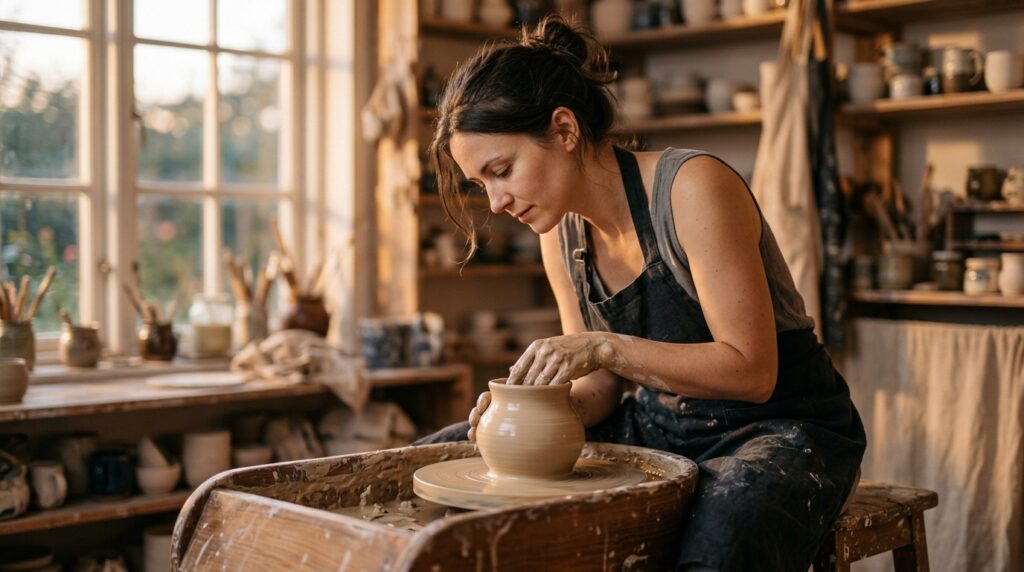
Cottagecore enthusiasts often embrace:
- Knitting culture
- Crochet community activities
- Home baking
- Embroidery art
- Pottery workshops
- Handmade culture
The movement encourages appreciation for:
- Heritage
- Tradition
- Craftsmanship
- Cultural preservation
These values resonate strongly with young people seeking alternatives to fast-paced modern lifestyles.
The Social Side of Crafting
Why Craft Communities Are Growing
Another major factor behind Why Gen Z Is Reviving Traditional Crafts is the desire for connection.
Despite being digitally connected, many young adults report feelings of loneliness.
Traditional crafts help solve this problem by creating opportunities for community building.
Today there are thriving:
- Knitting communities
- Crochet communities
- Online communities
- Maker groups
- Local workshops
- Craft clubs
These spaces allow people to share knowledge, celebrate progress, and build friendships.
Online Communities and Social Platforms
Modern crafting communities flourish on social platforms such as:
- TikTok
- Discord
- Facebook Groups
These platforms help beginners:
- Learn techniques
- Share projects
- Ask questions
- Receive encouragement
This accessibility makes crafting feel welcoming and inclusive.
Intergenerational Learning and Wisdom Sharing
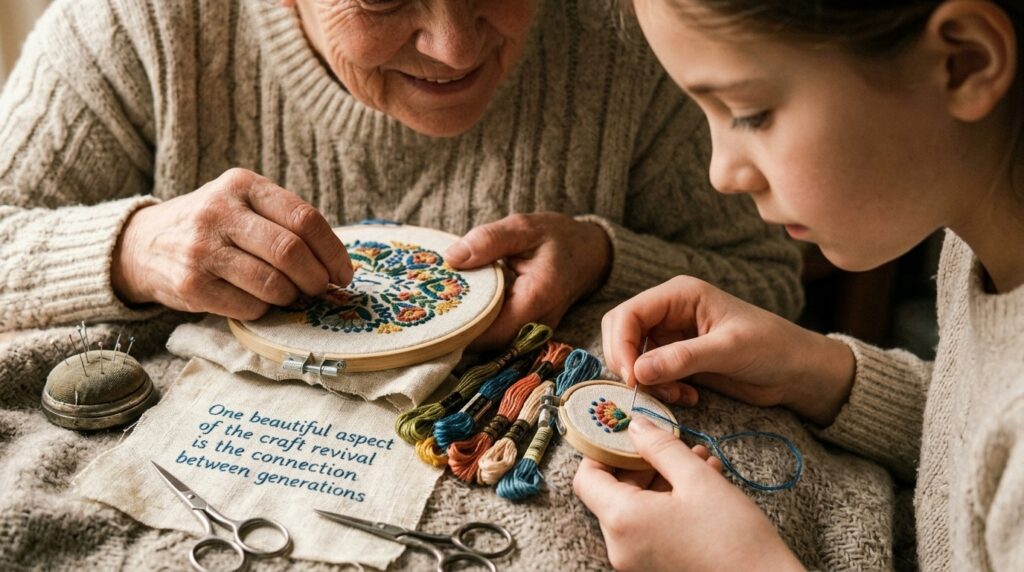
One beautiful aspect of the craft revival is the connection between generations.
Many young crafters learn skills from:
- Parents
- Grandparents
- Mentors
- Experienced makers
This form of wisdom sharing strengthens relationships while preserving valuable knowledge.
Through intergenerational learning, traditional techniques remain relevant and accessible.
The process also reinforces:
- Cultural heritage
- Family traditions
- Human connection
- Community influence
Why Handmade Fashion Continues to Dominate Social Media
Fashion Meets Creativity
Fashion remains one of the strongest drivers behind the craft movement.
Young creators increasingly view crafting as a way to design unique clothing unavailable in stores.
Popular handmade fashion items include:
- Crochet tops
- Knitwear
- Handmade sweaters
- Handmade accessories
- Customized denim jackets
- Decorative embroidery pieces
These projects allow creators to combine fashion with artistic expression.
The Rise of Crochet and Knitted Sports Jerseys
A particularly interesting trend involves handmade sports apparel.
Many crafters are creating:
- Customized team apparel
- Knitted sports jerseys
- Crochet-inspired fan merchandise
These projects combine fandom with creativity and individuality.
The trend demonstrates how traditional crafts continue evolving to meet contemporary interests.
The Importance of Aesthetics in Modern Crafting
Handmade Aesthetics and Personal Branding
For many Gen Z creators, crafting is closely linked to visual identity.
Handmade creations contribute to:
- Personal branding
- Social media content
- Creative portfolios
- Artistic self-expression
Popular aesthetics include:
- Minimalist designs
- Vintage-inspired looks
- Nature-inspired themes
- Bold color palettes
These visual approaches help creators distinguish themselves online.
Why Color Matters
Modern makers are highly intentional about color selection.
They explore:
- Color palettes
- Hue relationships
- Saturation levels
- Value contrasts
Popular choices include:
- Earthy tones
- Soft pastels
- Vibrant neons
- Nature-inspired combinations
The availability of specialty yarns and artistic materials has made experimentation easier than ever.
The Trend-Driven Gen Z Crafter
Viral Content Drives Discovery
While sustainability and wellness are important motivations, trends also play a role.
Many young creators discover crafts through:
- Viral videos
- Influencers
- Tutorials
- Project inspiration posts
A single crochet project can generate millions of views and inspire thousands of new participants.
This phenomenon has helped accelerate the craft revival dramatically.
Traditional Crafts Have Become Social Media Friendly
Craft content performs well because it is:
- Visually satisfying
- Educational
- Inspiring
- Easy to share
Creators enjoy documenting:
- Project beginnings
- Progress updates
- Finished projects
- Creative processes
This content naturally attracts engagement and encourages participation.
Crafting Is Becoming a Lifelong Hobby
Many people initially begin crafting because of a trend.
However, they often stay because of the deeper benefits.
Traditional crafts offer:
- Relaxation
- Creativity
- Community
- Skill development
- Personal fulfillment
As a result, what begins as a casual interest frequently evolves into a lifelong hobby.
This transformation explains why the current craft revival appears far more durable than a temporary social media trend.
The Embroidery Revival: Why Gen Z Is Stitching the Future
One of the most fascinating chapters in the story of Why Gen Z Is Reviving Traditional Crafts is the remarkable resurgence of embroidery.
Once viewed as a domestic skill practiced quietly at home, embroidery has evolved into a modern form of self-expression, activism, fashion customization, and artistic storytelling.
Today’s young makers use embroidery to:
- Personalize clothing
- Repair damaged garments
- Create wall art
- Express social values
- Celebrate cultural identity
- Develop artistic skills
This revival reflects Gen Z’s desire for authenticity and meaningful creativity.
Unlike mass-produced fashion, embroidered pieces showcase the maker’s personality through every stitch.
Embroidery as Artistic Expression
Modern embroidery extends far beyond traditional floral patterns.
Today’s creators experiment with:
- Abstract designs
- Pop culture references
- Nature-inspired artwork
- Political messages
- Personalized illustrations
Many contemporary embroiderers use textiles as a medium for storytelling.
Exhibitions in cities such as London have highlighted how embroidery can communicate identity, resilience, community, and social change.
The growing popularity of textile-based artwork demonstrates how traditional techniques continue evolving within contemporary culture.
Essential Embroidery Techniques Beginners Are Learning
Many Gen Z crafters begin with simple techniques before progressing to advanced embroidery art.
Popular stitches include:
Basic Stitches
- Running stitch
- Back stitch
- Chain stitch
- Satin stitch
Intermediate Techniques
- Long and short stitch
- Decorative stitching
- Layered embroidery
- Visible mending techniques
Essential Tools
Beginners frequently invest in:
- Embroidery hoop
- Embroidery needle
- Cotton embroidery thread
- Transfer paper
- Fabric markers
- Storage bobbins
These tools make learning accessible and affordable.
Why Upcycling Is Becoming a Cultural Movement
The Rise of Upcycled Fashion
One of the strongest trends among younger consumers is upcycling.
Instead of discarding old garments, Gen Z increasingly transforms them into something new.
This practice supports:
- Sustainable living
- Circular fashion
- Waste reduction
- Creative self-expression
Popular upcycling projects include:
- Denim jacket customization
- Decorative embroidery
- Patchwork designs
- Textile repair
- Clothing customization
This movement directly challenges modern consumer culture.
Visible Mending Is Becoming Fashionable
Historically, clothing repairs were hidden.
Today, many creators proudly showcase repairs through:
- Visible mending
- Darning
- Decorative patchwork
- Creative stitching
Visible mending transforms imperfections into artistic features.
This approach reflects broader values such as:
- Sustainability
- Authenticity
- Resourcefulness
- Creative confidence
Instead of replacing damaged clothing, young makers celebrate repair culture.
Fighting Overconsumption Through Creativity
Many Gen Z consumers recognize the consequences of overconsumption.
Concerns include:
- Environmental degradation
- Excessive waste
- High carbon emissions
- Exploitation within supply chains
- Landfill growth
Crafting offers a practical alternative.
By repairing, repurposing, and creating items by hand, makers actively participate in a more sustainable economy.
This shift represents a broader movement toward mindful consumption and environmental responsibility.
Why Heritage and Tradition Matter to Gen Z
Rediscovering Cultural Heritage
Contrary to common stereotypes, Gen Z shows significant interest in history and tradition.
Many young adults are exploring:
- Family traditions
- Cultural heritage
- Historical crafts
- Artisan techniques
- Traditional craftsmanship
The Heritage & Tradition Explorer persona often seeks deeper understanding of where crafts originate and how they evolved over time.
This curiosity contributes to the preservation of valuable cultural knowledge.
Traditional Skills Connect Generations
Traditional crafts often serve as bridges between generations.
Skills passed down through families create opportunities for:
- Shared experiences
- Mentorship
- Storytelling
- Cultural preservation
Whether learning knitting from a grandparent or pottery from a community artisan, these experiences strengthen intergenerational relationships.
This human connection is one reason the craft revival feels especially meaningful.
Pottery, Weaving, and the Return of Handcrafted Art
Beyond Knitting and Crochet
Although knitting and crochet dominate many headlines, the broader revival includes numerous traditional disciplines.
Popular examples include:
Pottery
Pottery has become one of the fastest-growing creative hobbies among young adults.
Its appeal includes:
- Hands-on creativity
- Functional artwork
- Mindfulness benefits
- Home décor opportunities
Weaving
Weaving combines artistic design with technical skill.
Modern weavers create:
- Wall hangings
- Home textiles
- Decorative artwork
- Fashion accessories
Calligraphy
The resurgence of calligraphy reflects interest in slow, intentional creativity.
Many creators use calligraphy for:
- Journaling
- Wedding stationery
- Branding
- Personal projects
Hand-Carved Sculptures
Artists interested in traditional craftsmanship often explore:
- Wood carving
- Stone carving
- Hand-carved sculptures
These forms celebrate patience, precision, and craftsmanship.
The Human Touch in an Automated World
Why Authenticity Matters More Than Ever
Artificial intelligence, automation, and mass production continue transforming modern life.
As technology advances, many consumers increasingly value the human qualities found in handmade work.
Handcrafted objects contain:
- Imperfections
- Personality
- Stories
- Emotional value
These characteristics contribute to a sense of authenticity that machine-made products often lack.
The Value of Artisanal Work
Every handmade object reflects hours of effort and skill.
Examples include:
- A carefully applied brushstroke
- A detailed stitch
- A precise chisel mark
These elements reveal the presence of the maker.
Consumers increasingly appreciate this human connection.
This appreciation helps explain the growing popularity of:
- Handcrafted art
- Artisanal work
- Handmade culture
- Traditional craftsmanship
Sustainable Art and the New Creative Economy
The Rise of Slow Art
Just as slow fashion challenges fast fashion, slow art encourages thoughtful creation over rapid production.
Slow art emphasizes:
- Quality
- Intention
- Craftsmanship
- Emotional connection
This philosophy aligns closely with Gen Z values.
Young creators often prioritize meaningful work over mass production.
Eco-Friendly Materials and Sustainable Creativity
Many artisans are intentionally choosing:
- Natural fibers
- Recycled materials
- Renewable resources
- Eco-friendly materials
This focus on sustainability supports:
- Environmental awareness
- Ethical production
- Responsible consumption
The result is a growing market for environmentally conscious handmade products.
The Handmade Entrepreneur: Turning Passion Into Income
The Rise of the Handmade Economy
Traditional crafts are no longer viewed solely as hobbies.
Many young makers are transforming creative skills into business opportunities.
Common handmade business categories include:
| Craft Category | Popular Products |
| Knitting | Sweaters, scarves, hats |
| Crochet | Tops, bags, accessories |
| Embroidery | Custom clothing, artwork |
| Pottery | Mugs, bowls, décor |
| Weaving | Wall hangings, textiles |
| Calligraphy | Invitations, prints |
This growing handmade economy allows creators to monetize their skills while maintaining creative independence.
Challenges Facing Handmade Entrepreneurs
While opportunities exist, creators also face challenges:
Competition
Mass-produced goods often cost less than handmade alternatives.
Pricing
Many makers struggle to charge prices that reflect their labor and expertise.
Marketing
Building visibility in crowded online markets requires effort and consistency.
Scaling
Handmade production naturally limits growth compared to automated manufacturing.
Despite these challenges, many entrepreneurs remain committed because of the personal fulfillment associated with creative work.
Traditional Crafts as a Form of Empowerment
Creating Instead of Consuming
One reason Gen Z connects so strongly with crafting is empowerment.
Crafting transforms people from consumers into creators.
Rather than purchasing everything they need, makers learn to:
- Design
- Build
- Repair
- Customize
This independence fosters:
- Creative confidence
- Self-reliance
- Personal growth
Skill Development in the Digital Age
Traditional crafts teach valuable skills that many modern activities do not.
These include:
- Patience
- Focus
- Problem-solving
- Fine motor skills
- Planning
- Adaptability
These transferable skills benefit both personal and professional life.
Why the Craft Revival Is More Than a Trend
The growing interest in traditional crafts cannot be explained solely by social media popularity.
The movement addresses fundamental human needs:
- Creativity
- Connection
- Purpose
- Authenticity
- Sustainability
As long as these needs remain important, traditional crafts are likely to continue thriving.
The revival represents not a temporary trend but a cultural shift toward more intentional living.
A Useful Resource for Learning Traditional Crafts
For readers interested in developing new craft skills, educational resources such as the Craft Yarn Council provide beginner guides, terminology, and learning materials covering knitting, crochet, and related fiber arts.
The Future of Traditional Crafts in America
The growing interest in handmade skills suggests that the revival of traditional crafts is not a temporary phenomenon.
As more people seek authenticity, creativity, and meaningful experiences, traditional crafts are positioned to remain relevant for decades to come.
Several trends indicate continued growth:
| Trend | Impact on Traditional Crafts |
| Sustainable living | Increased demand for handmade products |
| Slow fashion movement | Growth of knitting and crochet communities |
| Mental wellness awareness | More crafting as self-care |
| Digital fatigue | Greater interest in screen-free hobbies |
| Social media discovery | Continued visibility of craft content |
| DIY culture | Expansion of maker communities |
| Creative entrepreneurship | Growth of handmade businesses |
These trends support a long-term craft revival rather than a short-lived trend cycle.
Why Gen Z Is Reviving Traditional Crafts and Reshaping Consumer Culture
Perhaps the most significant aspect of this movement is its influence on consumer behavior.
For decades, society encouraged people to purchase more products, replace items quickly, and prioritize convenience above all else.
Gen Z is increasingly questioning these assumptions.
Instead, many young adults are embracing:
- Sustainable fashion
- Repair culture
- Circular fashion
- Handmade culture
- Conscious consumption
- Eco-conscious lifestyles
This shift represents a broader transformation in values.
Rather than defining success through consumption, many young people now prioritize:
- Experiences
- Skills
- Creativity
- Community
- Purpose
Traditional crafts fit naturally within this worldview.
How Traditional Crafts Support Sustainability Goals
Reducing Environmental Impact
One reason Why Gen Z Is Reviving Traditional Crafts resonates so strongly is its connection to environmental responsibility.
Traditional crafts can help reduce:
- Textile waste
- Disposable fashion purchases
- Product replacement cycles
- Resource consumption
Activities such as:
- Clothing repair
- Upcycling
- Visible mending
- Knitting handmade garments
- Crocheting reusable products
encourage more sustainable habits.
Supporting Eco-Conscious Consumers
Today’s consumers increasingly seek products aligned with their values.
Handmade items often appeal because they emphasize:
- Quality over quantity
- Longevity over disposability
- Craftsmanship over mass production
This perspective supports a growing market for:
- Handmade clothing
- Handmade accessories
- Eco-friendly art
- Sustainable artistry
- Artisanal craftsmanship
As environmental awareness increases, demand for these products is likely to grow.
The Role of Innovation in Traditional Crafts
Tradition Meets Modern Creativity
One misconception about traditional crafts is that they resist innovation.
In reality, modern makers constantly experiment with new ideas.
Examples include:
- Advanced textile innovation
- Modern color palettes
- Contemporary embroidery art
- Innovative yarn fiber innovation
- Hybrid craft techniques
This balance between tradition and innovation helps keep crafts relevant.
Young creators respect historical techniques while adapting them for modern audiences.
Technology Is Supporting the Revival
Although many people turn to crafting as a break from screens, technology still plays an important role.
Today’s makers benefit from:
- Online crafting tutorials
- Digital pattern libraries
- Virtual workshops
- Creative communities
- Educational videos
Technology has made traditional skills more accessible than ever before.
Rather than replacing craftsmanship, digital tools often support its growth.
Why Traditional Crafts Appeal to Every Persona
The strength of the craft revival lies in its ability to serve diverse motivations.
The Sustainable Fashion Creator
Finds a practical solution to fast fashion and environmental concerns.
The Digital Detox Seeker
Discovers meaningful screen-free activities.
The Creative DIY Enthusiast
Gains endless opportunities for artistic experimentation.
The Cottagecore Lifestyle Follower
Embraces slow living and traditional values.
The Mental Wellness Crafter
Uses creativity to support emotional wellbeing.
The Social Community Builder
Finds connection through maker communities.
The Budget-Conscious Maker
Learns affordable ways to create and customize products.
The Heritage & Tradition Explorer
Preserves cultural knowledge and artisan skills.
The Handmade Entrepreneur
Builds a business around creativity.
The Trend-Driven Gen Z Crafter
Combines self-expression with social media engagement.
This broad appeal explains why the movement continues expanding.
Key Benefits of Traditional Crafts for Gen Z
Personal Benefits
- Increased creativity
- Enhanced mindfulness
- Reduced stress
- Improved focus
- Greater confidence
- Stronger sense of purpose
Social Benefits
- Community building
- Friendship opportunities
- Intergenerational learning
- Shared experiences
- Collaborative creativity
Environmental Benefits
- Reduced waste
- Sustainable consumption
- Product longevity
- Upcycling opportunities
- Support for circular fashion
Economic Benefits
- Handmade business opportunities
- Side-income potential
- Valuable skills development
- Reduced spending on disposable goods
Frequently Asked Questions
Why Is Gen Z Reviving Traditional Crafts?
Gen Z is reviving traditional crafts because they provide creativity, self-expression, sustainability, mindfulness, and meaningful experiences. Traditional crafts also offer an escape from digital overload while supporting environmental and personal values.
What Traditional Crafts Are Most Popular Among Gen Z?
Some of the most popular traditional crafts include:
- Knitting
- Crochet
- Embroidery
- Pottery
- Weaving
- Calligraphy
- Visible mending
- Punch needle art
- DIY fashion projects
How Does Crafting Help Mental Health?
Crafting encourages mindfulness, focus, relaxation, and creative expression. Many people find repetitive activities such as knitting and crocheting calming, which can help reduce stress and anxiety.
Is Traditional Crafting Sustainable?
Yes. Traditional crafting often supports sustainability by encouraging repair, upcycling, mindful consumption, and long-lasting handmade products.
Can Traditional Crafts Become a Business?
Absolutely. Many creators successfully sell handmade products, teach workshops, create digital patterns, and build online communities around their craft expertise.
Why Are Crochet and Knitting Trending on Social Media?
Platforms such as TikTok and Pinterest have made craft tutorials highly accessible. Visual project transformations, creative designs, and satisfying progress videos perform particularly well online.
Are Traditional Crafts Only Popular With Women?
No. Although women represent a significant portion of the crafting community, participation continues growing among men and people of all backgrounds and age groups.
What Is the Difference Between Slow Fashion and Fast Fashion?
Fast fashion emphasizes rapid production and low prices, often resulting in waste and environmental concerns. Slow fashion prioritizes quality, durability, ethical production, and sustainability.
Final Thoughts: Why Gen Z Is Reviving Traditional Crafts
The answer to Why Gen Z Is Reviving Traditional Crafts extends far beyond nostalgia.
This movement represents a response to many challenges facing modern society:
- Digital overload
- Fast fashion waste
- Environmental concerns
- Mental health struggles
- Social isolation
- Loss of traditional skills
Through knitting, crochet, embroidery, pottery, weaving, calligraphy, upcycling, and countless other handmade practices, Gen Z is building a culture that values creativity, craftsmanship, sustainability, and human connection.
Traditional crafts offer something increasingly rare in today’s world: the opportunity to slow down, create something meaningful, and connect with others through shared experience.
What began as a hobby resurgence has evolved into a broader cultural movement.
As young makers continue embracing artisan skills, sustainable creativity, and handmade culture, traditional crafts are not simply surviving they are shaping the future.
The revival demonstrates that even in an age of artificial intelligence, automation, and instant gratification, people still crave the human touch, artistic authenticity, and timeless satisfaction that come from making something with their own hands.