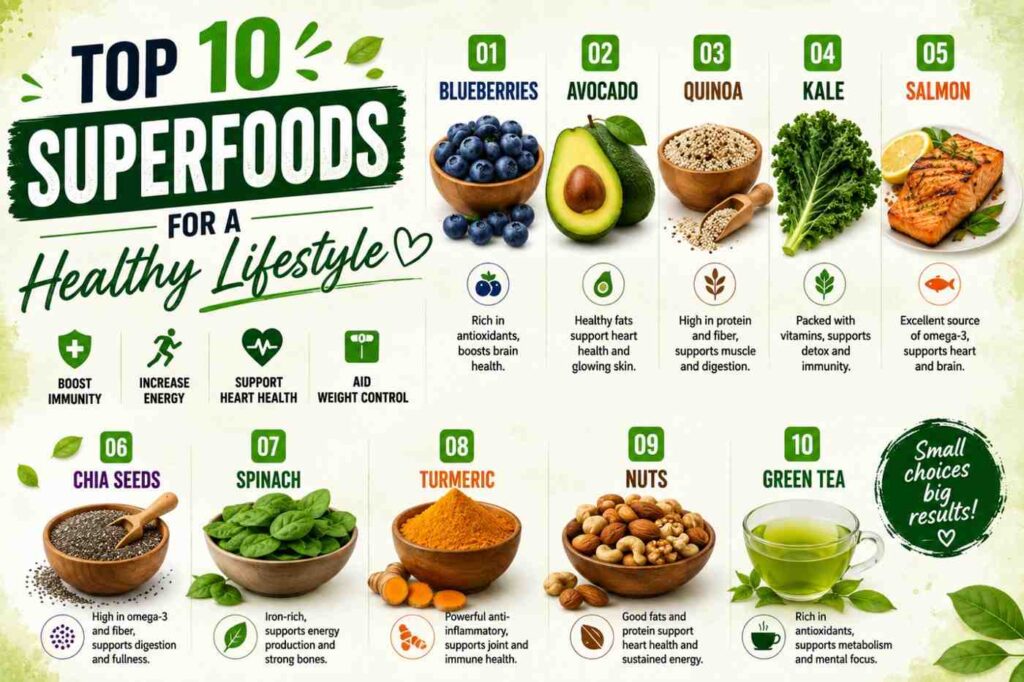
Top 10 Superfoods for a Healthy Lifestyle
The Top 10 Superfoods for a Healthy Lifestyle are foods that can help make everyday meals more nourishing, balanced, and satisfying. These foods are not magic solutions, and they should not be treated as quick fixes. Instead, they are smart food choices that provide more nutritional value than many highly processed alternatives. When used regularly, they can support energy, digestion, heart-conscious eating, better meal quality, and overall wellness.
A healthy lifestyle is built through consistency, not perfection. Many people feel overwhelmed when they hear words like “clean eating,” “wellness,” or “superfoods,” but the idea is actually simple. Choose more whole foods, add more color to your plate, include quality protein, eat enough fiber, and use healthy fats in sensible portions. This article focuses on practical superfoods that are easy to find, easy to prepare, and realistic for daily life.
In my experience, the most effective nutrition changes are the ones people can repeat without stress. That is why this guide does not focus on rare, expensive, or trendy ingredients. Instead, it highlights familiar nutrient-dense foods such as blueberries, oats, lentils, leafy greens, yogurt, salmon, seeds, and broccoli. These foods fit naturally into breakfast bowls, salads, soups, snacks, smoothies, and family meals. By the end, you will understand why these foods matter, how to use them, and how to build a healthier routine without making your diet complicated.
What Makes a Food a Superfood?
A food is usually described as a superfood when it offers a high amount of nutritional value in relation to its serving size. These foods often contain several important nutrients at once, such as fiber, vitamins, minerals, antioxidants, healthy fats, plant compounds, protein, or probiotics. However, it is important to remember that “superfood” is not a strict scientific category. It is more of a helpful wellness term used to describe foods that can support a healthy eating pattern.
The strongest superfoods are usually whole or minimally processed foods. This means they are close to their natural form and do not depend on excessive added sugar, sodium, artificial flavoring, or unhealthy fats. Examples include vegetables, fruits, legumes, whole grains, nuts, seeds, fermented dairy, and fatty fish. These foods are valuable because they do more than fill you up; they also provide nutrients your body uses for energy, digestion, cell function, and long-term wellness.
When choosing superfoods for a healthy lifestyle, balance matters more than hype. A person who eats blueberries every day but rarely eats vegetables, whole grains, or protein may still have gaps in their diet. A better strategy is to combine different superfoods throughout the week. This creates a wider nutrient profile and makes meals more enjoyable. Superfoods should improve your overall diet, not become a restrictive rule.
Superfoods Are Nutrient-Dense, Not Magical
Superfoods are best understood as nutrient-dense foods, not miracle foods. A nutrient-dense food provides useful nutrition without relying heavily on empty calories, added sugar, refined flour, or excess salt. For example, blueberries offer fiber and plant compounds, lentils provide fiber and plant-based protein, salmon contains omega-3 fatty acids and protein, and leafy greens supply vitamins and minerals. These foods can support a healthier lifestyle because they add real value to the meals you already eat.
The problem begins when superfoods are marketed as cures or shortcuts. Eating chia seeds, kale, or avocado will not cancel out an overall unhealthy diet. They also cannot replace sleep, exercise, hydration, or medical care when needed. What they can do is make your daily meals more balanced and nutrient-rich. That is why I recommend thinking of superfoods as supportive ingredients. They work best when they replace less nutritious choices and become part of a consistent eating routine.
The Best Superfoods Support Daily Eating Habits
The best superfoods to eat are the ones that fit naturally into your lifestyle. A food may be nutritious, but if it is difficult to find, too expensive, or unpleasant to eat, it will not become part of your routine. Practical choices such as oats, frozen berries, lentils, broccoli, Greek yogurt, spinach, walnuts, and eggs are often more useful than rare health foods that people buy once and never use again.
Good superfoods should make healthy eating easier, not harder. Oats can become breakfast in five minutes. Lentils can be cooked in a large batch and used in soups, salads, and curries. Frozen berries can be added to smoothies, yogurt, or oatmeal. Avocado can improve sandwiches and salads. Leafy greens can be cooked into eggs, pasta, soups, or rice dishes. When healthy foods are convenient, people are more likely to eat them regularly. This is the real value of the Top 10 Superfoods for a Healthy Lifestyle: they are nutritious, flexible, and realistic.
Top 10 Superfoods for a Healthy Lifestyle
The Top 10 Superfoods for a Healthy Lifestyle include a mix of fruits, vegetables, whole grains, legumes, healthy fats, fermented foods, and quality protein sources. This variety is important because each food supports the body in a different way. Some provide antioxidants, some support digestive health through fiber, some offer healthy fats, and others help with protein intake. A well-rounded healthy superfoods list should never focus on only one nutrient or one food group.
Blueberries and leafy greens are excellent choices for people who want more antioxidant-rich foods and micronutrients. Salmon and sardines are valuable because they provide omega-3 fatty acids, which are commonly linked with heart-conscious eating patterns. Oats, quinoa, and lentils are useful because they provide fiber and help make meals more filling. Greek yogurt and kefir may support gut-friendly eating when they contain live cultures. Walnuts, chia seeds, and avocado add healthy fats, while broccoli brings fiber, vitamin C, and plant compounds to the plate.
The purpose of this list is not to create pressure to eat every item every day. Instead, use it as a flexible guide. You can choose two or three foods at a time and slowly build them into your normal meals. Over time, these simple changes can improve the quality of your diet without making your meals feel restrictive or difficult.
| Superfood | Key Nutrients | Best For | Easy Way to Eat It |
|---|---|---|---|
| Blueberries | Fiber, vitamin C, antioxidants | Antioxidant support | Add to oats, yogurt, or smoothies |
| Leafy greens | Folate, vitamin K, minerals | Daily micronutrients | Use in salads, soups, eggs, or smoothies |
| Salmon or sardines | Protein, omega-3 fatty acids | Heart-conscious meals | Bake, grill, or add to grain bowls |
| Oats | Soluble fiber, whole grains | Breakfast and fullness | Make oatmeal or overnight oats |
| Quinoa | Fiber, minerals, plant protein | Balanced meals | Use instead of white rice |
| Lentils | Fiber, protein, iron | Budget-friendly meals | Add to soup, curry, or salad |
| Greek yogurt or kefir | Protein, live cultures | Gut-friendly eating | Eat with fruit or blend into smoothies |
| Walnuts and chia seeds | Healthy fats, fiber | Snacks and toppings | Add to cereal, yogurt, or smoothies |
| Avocado | Unsaturated fats, fiber | Healthy fats | Add to toast, salads, or wraps |
| Broccoli | Fiber, vitamin C, phytonutrients | Vegetable intake | Steam, roast, or stir-fry |
Blueberries, Leafy Greens, and Broccoli
Blueberries, leafy greens, and broccoli are three of the most useful plant-based superfoods because they add color, fiber, vitamins, minerals, and antioxidant compounds to everyday meals. Blueberries are easy to use because they require no cooking and work well in oatmeal, yogurt, smoothies, salads, and healthy desserts. They are also naturally sweet, which makes them a practical replacement for sugary toppings.
Leafy greens such as spinach, kale, romaine, arugula, and Swiss chard are valuable because they add volume and nutrition without making meals heavy. They can be eaten raw, lightly sautéed, blended into smoothies, or added to soups and omelets. Broccoli is another strong choice because it is affordable, filling, and versatile. It can be steamed, roasted, stir-fried, or added to grain bowls. Together, these foods help increase daily vegetable and fruit intake, which is one of the most important foundations of a balanced diet.
Salmon, Oats, Quinoa, and Lentils
Salmon, oats, quinoa, and lentils are excellent superfoods because they help make meals more satisfying. Salmon is rich in protein and omega-3 fatty acids, making it a smart choice for people who want more nutrient-dense protein in their diet. Sardines are another great option because they are often affordable, convenient, and rich in similar nutrients. These fatty fish can be baked, grilled, added to salads, or served with whole grains and vegetables.
Oats are one of the easiest superfoods for beginners because they are simple, budget-friendly, and ideal for breakfast. They contain soluble fiber, which helps create a feeling of fullness. Quinoa is a flexible whole grain alternative that works well in salads, bowls, and side dishes. Lentils are especially useful because they provide plant-based protein, fiber, and minerals at a low cost. When combined, these foods create balanced meals that support energy, fullness, and better eating habits.
Yogurt, Nuts, Seeds, and Avocado
Greek yogurt, kefir, walnuts, chia seeds, and avocado are excellent additions to a healthy lifestyle because they provide protein, healthy fats, fiber, or live cultures depending on the food. Greek yogurt is higher in protein than many regular yogurts, which makes it useful for breakfast, snacks, smoothies, and sauces. Kefir is a fermented drink that may contain live cultures, making it a good option for people interested in gut health foods.
Walnuts and chia seeds are small but nutrient-rich. Walnuts provide healthy fats and can be used in oatmeal, salads, and snacks. Chia seeds absorb liquid and work well in pudding, smoothies, yogurt bowls, and overnight oats. Avocado is another popular superfood because it contains unsaturated fats and fiber. It can replace butter-heavy spreads, improve salads, and make meals more satisfying. These foods are nutritious, but portion size still matters because nuts, seeds, and avocado are calorie-dense.
How to Add Superfoods to Your Diet
Adding superfoods to your diet should feel simple and sustainable. Many people make the mistake of trying to change everything at once, which can lead to frustration. A better method is to start with meals you already eat and improve them gradually. For example, instead of replacing your entire breakfast routine, you can add blueberries and chia seeds to oatmeal. Instead of creating a complicated lunch, you can add spinach, lentils, or avocado to a meal you already enjoy.
The easiest way to use the Top 10 Superfoods for a Healthy Lifestyle is to think in food groups. Choose one fruit, one vegetable, one whole grain, one protein source, and one healthy fat. This creates balance without requiring strict meal plans. A simple bowl with quinoa, lentils, leafy greens, broccoli, and avocado can provide fiber, protein, healthy fats, vitamins, and minerals in one meal. A breakfast bowl with oats, yogurt, blueberries, walnuts, and chia seeds can do the same in a different way.
Superfoods also become easier to use when you prepare them ahead of time. Wash greens, cook lentils, portion nuts, freeze berries, and keep oats or quinoa in the pantry. These small habits reduce decision fatigue and make healthy eating more convenient during busy days. The goal is not perfection. The goal is to make nutritious choices more available.
Start With One Meal at a Time
The most practical way to add superfoods to your routine is to begin with one meal. Breakfast is often the easiest starting point because foods like oats, Greek yogurt, berries, chia seeds, and walnuts naturally fit together. A bowl of oatmeal with blueberries and chia seeds is simple, affordable, and rich in fiber. Greek yogurt with berries and walnuts is another quick option that provides protein, healthy fats, and natural sweetness.
Once breakfast feels easy, move to lunch or dinner. Add spinach to sandwiches, lentils to soups, quinoa to salads, or broccoli to rice bowls. You do not need to create perfect meals every day. Even adding one nutrient-dense food to one meal can improve the overall quality of your diet. This approach is especially useful for beginners because it builds confidence. Healthy eating becomes less intimidating when it starts with small upgrades rather than strict rules.
Use a Simple Weekly Superfood Plan
A weekly plan can help you include superfoods without overthinking every meal. Start by choosing five foods from the healthy superfoods list for the week. For example, you might choose oats, blueberries, lentils, broccoli, and avocado. Then decide where each one fits. Oats and blueberries can be used for breakfast, lentils can go into soup, broccoli can be roasted for dinner, and avocado can be added to toast or salads.
This type of planning works because it is flexible. You are not locking yourself into complicated recipes. You are simply making sure nutrient-dense foods are available when you need them. I recommend keeping a few reliable staples at home, such as frozen berries, canned lentils, plain yogurt, oats, and nuts. These foods can quickly turn basic meals into healthier meals. Over time, this habit makes superfoods feel normal rather than special or difficult.
Superfoods for Heart, Gut, and Energy Support
Different superfoods support different nutrition goals, which is why variety is so important. Some foods are especially useful for heart-conscious eating because they contain fiber, unsaturated fats, or omega-3 fatty acids. Others support digestion because they provide fiber or live cultures. Some help with energy by offering complex carbohydrates, protein, and healthy fats in balanced combinations. When these foods are used together, they can support a more complete and realistic healthy lifestyle.
For heart-focused meals, foods such as salmon, sardines, oats, lentils, walnuts, chia seeds, avocado, and leafy greens are strong choices. They fit well into balanced eating patterns that emphasize whole foods instead of heavily processed meals. For gut-friendly eating, fiber-rich foods such as oats, lentils, quinoa, berries, broccoli, and greens are helpful because fiber supports digestive regularity. Yogurt and kefir may also be useful when they contain live and active cultures.
For energy, the key is balance. A meal made only of refined carbohydrates may give quick energy but may not keep you full for long. A better option combines whole grains, protein, fiber, and healthy fats. For example, oats with yogurt, berries, and chia seeds can be more satisfying than a sugary pastry. Quinoa with lentils, avocado, and vegetables can provide steady fuel for the day.
| Health Goal | Recommended Superfoods | Key Nutrients | Practical Meal Idea |
|---|---|---|---|
| Heart Health | Salmon, Oats, Walnuts, Avocado | Omega-3 fatty acids, soluble fiber, healthy fats | Grilled salmon with oats or quinoa and avocado salad |
| Gut Health | Greek Yogurt, Kefir, Lentils, Broccoli | Probiotics, fiber, prebiotics | Greek yogurt with berries or lentil soup with broccoli |
| Energy Support | Oats, Quinoa, Blueberries, Chia Seeds | Complex carbohydrates, antioxidants, fiber | Oatmeal with blueberries and chia seeds |
| Muscle Recovery | Greek Yogurt, Salmon, Lentils | Protein, omega-3 fats, iron | Greek yogurt parfait or baked salmon with lentils |
| Weight Management | Leafy Greens, Broccoli, Oats, Lentils | Fiber, vitamins, plant protein | Large vegetable salad with lentils and oats |
Superfoods for Heart Health
Superfoods for heart health usually include foods rich in fiber, healthy fats, and quality protein. Fatty fish such as salmon and sardines are valuable because they contain omega-3 fatty acids. Walnuts and chia seeds also provide healthy fats and can be added easily to meals. Oats and lentils are strong choices because they contain fiber and help make meals more filling.
Leafy greens, broccoli, avocado, and berries also fit well into heart-conscious eating patterns. They add color, minerals, plant compounds, and fiber while helping reduce reliance on less nutritious foods. A simple heart-friendly meal might include baked salmon, quinoa, steamed broccoli, leafy greens, and avocado. The important point is not to focus on one food alone. Heart-supportive eating works best when several nutrient-dense foods are included consistently as part of an overall balanced diet.
Superfoods for Gut Health and Energy
Gut health and energy are closely connected to food quality. High-fiber foods such as oats, lentils, quinoa, chia seeds, broccoli, berries, and leafy greens support digestive regularity and help meals feel more satisfying. Fiber also helps slow digestion, which may support steadier energy compared with meals that are mostly made from refined carbohydrates and added sugar.
Greek yogurt and kefir can be helpful additions when they contain live cultures. They are easy to use in breakfast bowls, smoothies, dips, and snacks. For energy, I recommend combining three elements: complex carbohydrates, protein, and healthy fats. For example, oats provide carbohydrates and fiber, Greek yogurt adds protein, berries bring natural sweetness and antioxidants, and chia seeds contribute fiber and healthy fats. This kind of meal is simple but nutritionally balanced, making it useful for busy mornings or active days.
Common Mistakes to Avoid With Superfoods
Superfoods can improve your diet, but they are often misunderstood. The biggest mistake is treating them like a shortcut. No food can make up for a consistently poor diet, lack of movement, poor sleep, chronic stress, or dehydration. A person can eat kale and blueberries every day, but if most meals are high in added sugar, refined grains, and heavily processed foods, the overall diet may still be unbalanced.
Another common mistake is buying expensive products because they are marketed as superfoods. Powders, supplements, specialty drinks, and imported ingredients are not always necessary. Many of the best superfoods to eat are simple grocery items such as oats, lentils, broccoli, spinach, yogurt, and frozen berries. These foods are often more affordable, more versatile, and easier to use regularly.
It is also important to avoid overdoing portions, especially with calorie-dense superfoods such as nuts, seeds, and avocado. These foods are nutritious, but more is not always better. A balanced serving can improve a meal, while very large portions may add more calories than expected. The goal is to use superfoods wisely, not excessively. When approached with balance, superfoods can become a helpful part of everyday wellness rather than another diet trend.
Do Not Rely on One Food Only
One of the most common mistakes is relying too heavily on one superfood. For example, eating blueberries every morning is a healthy habit, but blueberries alone cannot provide all the nutrients the body needs. The same applies to salmon, chia seeds, spinach, or avocado. Each food has strengths, but each also has limits. A healthy lifestyle requires variety.
A better strategy is to rotate different nutrient-dense foods throughout the week. You might eat oats and berries for breakfast, lentils and greens for lunch, salmon and broccoli for dinner, and yogurt with walnuts as a snack. This kind of variety helps provide fiber, protein, healthy fats, vitamins, minerals, and plant compounds from multiple sources. It also keeps meals more enjoyable. When healthy eating becomes repetitive, people often lose interest. Variety makes the habit easier to maintain.
Watch Added Sugar, Sodium, and Portion Size
Not every product labeled as healthy is automatically a good choice. Flavored yogurt may contain high amounts of added sugar. Trail mixes may include candy or sweetened dried fruit. Packaged granola can be calorie-dense and sugar-heavy. Canned soups with lentils or vegetables may contain excess sodium. Even healthy foods can become less nutritious depending on how they are prepared or packaged.
Portion size also matters. Avocado, nuts, seeds, and oily fish are nutritious, but they are energy-dense. This does not mean you should avoid them. It simply means they should be used in sensible amounts. I recommend choosing plain or minimally processed versions when possible. Use fruit to sweeten yogurt, herbs and lemon for flavor, and roasted vegetables instead of heavily fried sides. These simple choices help you get the benefits of superfoods without accidentally adding too much sugar, salt, or unnecessary calories.
Practical Superfood Meal Ideas
The Top 10 Superfoods for a Healthy Lifestyle become much easier to use when they are turned into real meals. A list of healthy foods is helpful, but practical meal ideas are what make the information useful. Many people know they should eat more vegetables, whole grains, and healthy fats, but they struggle with how to combine them in a way that tastes good and fits into a busy schedule.
The good news is that superfood meals do not need to be complicated. A balanced meal can be built with a simple formula: start with a fiber-rich base, add a protein source, include colorful vegetables or fruit, and finish with a healthy fat. For breakfast, that might mean oats, Greek yogurt, berries, and chia seeds. For lunch, it could be quinoa, lentils, leafy greens, broccoli, and avocado. For dinner, it might be salmon, roasted vegetables, and a whole grain side.
These meals are flexible. You can adjust them based on taste, budget, culture, and availability. Frozen vegetables, canned fish, canned lentils, and plain yogurt can all be useful when fresh ingredients are not available. The goal is not to create perfect meals every time. The goal is to build repeatable combinations that make healthy eating feel simple, satisfying, and realistic.
| Meal Time | Superfoods to Include | Nutrition Focus | Simple Example |
|---|---|---|---|
| Breakfast | Oats, Blueberries, Greek Yogurt, Chia Seeds | Fiber, protein, antioxidants | Oatmeal topped with blueberries, yogurt, and chia seeds |
| Mid-Morning Snack | Walnuts, Fruit | Healthy fats, vitamins | A handful of walnuts with an apple |
| Lunch | Quinoa, Leafy Greens, Lentils, Avocado | Plant protein, fiber, healthy fats | Quinoa bowl with spinach, lentils, and avocado |
| Afternoon Snack | Kefir or Greek Yogurt | Probiotics, protein | Plain kefir with fresh berries |
| Dinner | Salmon, Broccoli, Quinoa | Omega-3 fats, vitamins, whole grains | Baked salmon with roasted broccoli and quinoa |
Breakfast and Snack Ideas
Breakfast is one of the easiest times to include superfoods because many nutrient-dense foods work naturally in morning meals. Oatmeal with blueberries, chia seeds, and walnuts is a simple option that provides fiber, healthy fats, and natural sweetness. Greek yogurt with berries and a small handful of nuts is another balanced choice that offers protein and texture without requiring much preparation.
Smoothies can also be useful when made carefully. A good smoothie might include kefir or Greek yogurt, frozen berries, spinach, chia seeds, and a small amount of oats. This creates a more balanced drink than a fruit-only smoothie. For snacks, try apple slices with walnuts, plain yogurt with berries, avocado on whole grain toast, or chia pudding made with milk or yogurt. These options are easy, filling, and more nourishing than many packaged snacks.
Lunch and Dinner Ideas
Lunch and dinner are great opportunities to combine several superfoods in one plate. A quinoa bowl with lentils, spinach, broccoli, avocado, and a lemon-based dressing can be filling, colorful, and nutrient-rich. You can also add grilled salmon or sardines for extra protein and omega-3 fats. This type of meal is easy to adjust depending on what you have at home.
Another simple dinner idea is baked salmon with roasted broccoli and a side of quinoa. For a plant-based option, lentil soup with leafy greens and vegetables can be both affordable and satisfying. Avocado can be added to wraps, salads, or grain bowls for creaminess and healthy fats. The key is to make meals balanced rather than overly complicated. When lunch and dinner include protein, fiber, vegetables, and healthy fats, they are more likely to support fullness and steady energy.
Quick Answer About Top 10 Superfoods for a Healthy Lifestyle
The Top 10 Superfoods for a Healthy Lifestyle are blueberries, leafy greens, salmon or sardines, oats, quinoa, lentils, Greek yogurt or kefir, walnuts and chia seeds, avocado, and broccoli. These foods are often called superfoods because they are nutrient-dense and provide valuable nutrients such as fiber, protein, healthy fats, vitamins, minerals, antioxidants, omega-3 fatty acids, and probiotics. However, the word “superfood” should not be misunderstood as a promise of instant health. No single food can replace a balanced diet, regular movement, sleep, hydration, and healthy lifestyle habits.
The best approach is to use superfoods as building blocks for better meals. For example, oats with berries and chia seeds can create a high-fiber breakfast, while salmon with broccoli and quinoa can become a nutrient-rich dinner. In simple terms, superfoods work best when they are part of a consistent, varied, and realistic eating pattern.
Frequently Asked Questions
This FAQ section answers common questions people ask when they are learning about superfoods for a healthy lifestyle. These answers are designed to be clear, practical, and easy to understand. Many readers want to know whether superfoods are truly necessary, how often they should eat them, and whether they are better than supplements. The simple answer is that superfoods can be very helpful, but they should be used as part of a balanced diet rather than treated as a complete solution.
A strong healthy lifestyle includes variety, hydration, physical activity, proper sleep, and realistic food habits. Superfoods can support that lifestyle by improving the quality of meals. They can also help beginners make better choices without following extreme diets. Instead of focusing on restriction, this approach focuses on adding more nutritious foods to meals you already enjoy.
The following questions cover practical concerns such as daily use, breakfast options, heart health, frozen foods, and supplements. These are common search-intent questions and are useful for readers who want quick answers before making changes to their diet.
What are the top 10 healthiest superfoods?
The top 10 healthiest superfoods include blueberries, leafy greens, salmon or sardines, oats, quinoa, lentils, Greek yogurt or kefir, walnuts and chia seeds, avocado, and broccoli. These foods are considered strong choices because they offer a wide range of nutrients, including fiber, protein, healthy fats, vitamins, minerals, antioxidants, and beneficial plant compounds. They also fit easily into everyday meals, which makes them practical for long-term healthy eating.
However, it is important not to treat this list as the only possible healthy superfoods list. Other nutritious foods such as beans, eggs, sweet potatoes, citrus fruits, olive oil, tomatoes, and mushrooms can also support a balanced diet. The best approach is to use these top 10 foods as a foundation while still eating a wide variety of whole foods.
Can I eat superfoods every day?
Yes, you can eat superfoods every day, and doing so can be a smart way to improve your overall diet. The key is variety. Eating oats, berries, leafy greens, lentils, yogurt, seeds, and vegetables throughout the week can help you get different nutrients from different food groups. This is much better than eating the same one or two foods repeatedly and expecting them to provide everything your body needs.
Daily superfood habits can be simple. You might add berries to breakfast, greens to lunch, lentils to soup, and broccoli to dinner. Small, repeated choices are often more effective than dramatic diet changes. If you have allergies, medical conditions, or specific dietary restrictions, it is best to adjust your choices based on professional advice.
Are superfoods better than supplements?
For most people, whole foods should come before supplements because foods provide nutrients in a more complete package. For example, lentils provide protein, fiber, minerals, and carbohydrates. Blueberries provide fiber, water, vitamins, and plant compounds. Salmon provides protein and healthy fats. Supplements usually provide isolated nutrients and may not offer the same overall food structure.
That does not mean supplements are never useful. Some people may need specific supplements based on age, diet, health status, pregnancy, deficiency, or medical guidance. However, supplements should not be used as a replacement for balanced meals. In my experience, the best strategy is to build a strong food foundation first and use supplements only when there is a clear reason.
Which superfoods are best for breakfast?
Some of the best breakfast superfoods include oats, blueberries, Greek yogurt, kefir, chia seeds, walnuts, and leafy greens. These foods work well together and are easy to prepare. Oats with berries and chia seeds make a filling high-fiber breakfast. Greek yogurt with walnuts and fruit provides protein, healthy fats, and natural sweetness. A smoothie with kefir, spinach, berries, and oats can also be a quick option.
The best breakfast should keep you satisfied and energized. That usually means including fiber, protein, and healthy fats rather than relying only on refined carbohydrates or sugar. A balanced breakfast does not need to be fancy. It only needs to be nourishing, practical, and easy enough to repeat.
Which superfoods support heart health?
Superfoods that support heart-conscious eating include salmon, sardines, oats, lentils, walnuts, chia seeds, avocado, leafy greens, berries, and broccoli. These foods are useful because they may provide fiber, unsaturated fats, omega-3 fatty acids, vitamins, minerals, and plant compounds. They also fit into eating patterns that emphasize whole foods and reduce reliance on highly processed meals.
A heart-friendly meal might include baked salmon, quinoa, broccoli, leafy greens, and avocado. A plant-based option could include lentils, oats, walnuts, vegetables, and berries throughout the day. It is important to avoid making medical claims about single foods. Heart health depends on the overall eating pattern, lifestyle habits, and individual health factors.
Are frozen superfoods still healthy?
Yes, frozen superfoods can still be healthy and are often very convenient. Frozen blueberries, spinach, broccoli, mixed vegetables, and fruit blends can help people eat more produce when fresh options are expensive, unavailable, or likely to spoil quickly. Frozen foods can also reduce waste because you can use only what you need and store the rest for later.
The main thing to check is the ingredient list. Choose plain frozen fruits and vegetables without added sugar, heavy sauces, or excess sodium. Frozen berries can be added to oats, yogurt, and smoothies. Frozen spinach can be cooked into eggs, soups, pasta, and rice dishes. Frozen broccoli can be steamed or roasted for quick meals.
Conclusion
The Top 10 Superfoods for a Healthy Lifestyle are not about trends, strict dieting, or expensive ingredients. They are about choosing nutrient-dense foods that make everyday meals more balanced and satisfying. Blueberries, leafy greens, salmon or sardines, oats, quinoa, lentils, Greek yogurt or kefir, walnuts and chia seeds, avocado, and broccoli all offer valuable nutrients that can support a healthier eating pattern.
The most important lesson is that superfoods work best together. One food alone cannot create a healthy lifestyle, but a variety of whole foods can improve the quality of your meals over time. Start with simple changes, such as adding berries to breakfast, greens to lunch, lentils to soup, or broccoli to dinner. These small habits are easier to maintain than strict diet rules.
Healthy eating should feel realistic, enjoyable, and sustainable. When you build meals around fiber, protein, healthy fats, colorful produce, and whole grains, you create a strong foundation for long-term wellness. Use this guide as a flexible starting point and choose the foods that fit your taste, budget, and routine.