Insights, Science, and Modern Discoveries
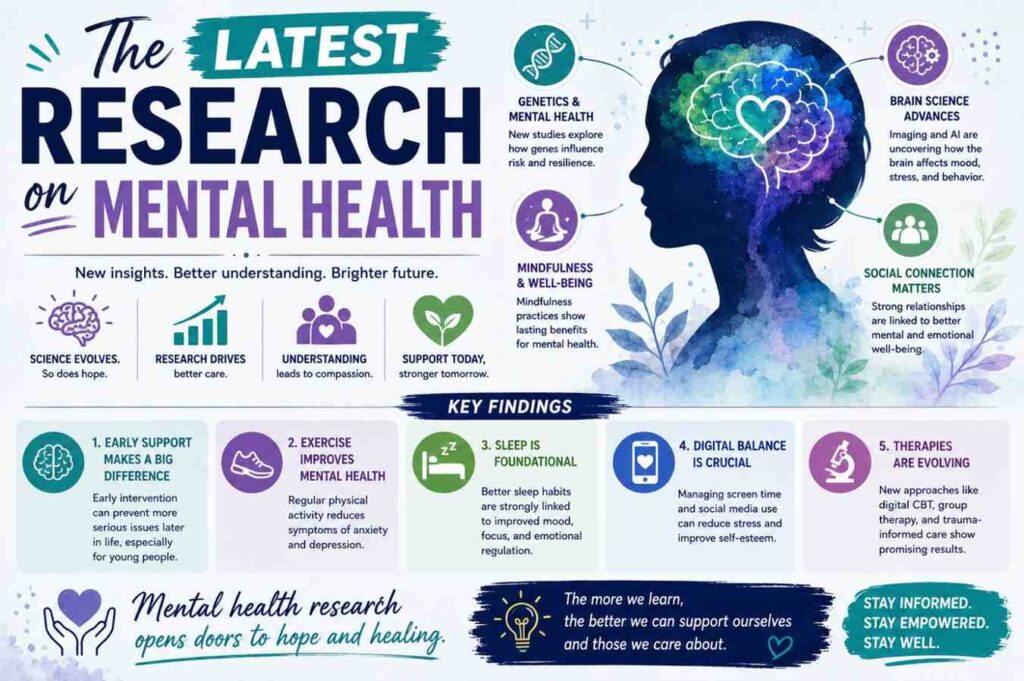
Mental health research has become one of the most rapidly evolving fields in modern science, with new studies continuously reshaping how we understand the mind, emotions, and behavior. Researchers are now focusing not only on mental illness but also on overall psychological wellbeing, resilience, and prevention strategies. This broader perspective is helping shift mental health care from treatment-based approaches to more proactive and holistic models.
Recent advancements in neuroscience and psychology have provided deeper insights into how the brain processes stress, emotions, and decision-making. Improved brain imaging technologies have allowed scientists to observe neural activity in real time, leading to better understanding of conditions such as depression, anxiety, and trauma-related disorders. These discoveries are helping create more accurate diagnoses and more targeted treatments.
Another major development in mental health research is the growing role of technology. Digital tools such as mental health apps, teletherapy platforms, and AI-based support systems are making care more accessible than ever before. At the same time, researchers are also studying the impact of digital life itself, including social media use, screen time, and information overload, on emotional wellbeing and cognitive health.
In addition, modern research is emphasizing personalized and preventive approaches to mental health. Scientists now recognize that genetics, environment, lifestyle, and personal experiences all interact to influence mental wellbeing. This has led to more customized treatments and early intervention strategies that aim to support individuals before conditions become severe, ultimately improving long-term outcomes and quality of life.
Understanding The Latest Research on Mental Health
The field of mental health research has expanded significantly over the past decade, moving beyond traditional psychological theories into neuroscience, genetics, behavioral science, and artificial intelligence. Researchers now focus not only on diagnosis but also on prevention, early detection, and long-term emotional resilience.
Modern studies emphasize that emotional well-being is dynamic and influenced by biological signals, environmental stressors, and cognitive habits. Advanced brain imaging helps scientists observe emotional responses and identify patterns linked to anxiety, depression, and stress-related disorders.
Global organizations such as the American Psychological Association contribute to setting research standards and improving therapeutic approaches. Mental health is now understood as a complex and interconnected system rather than a single-cause condition.
What modern mental health research focuses on
Modern mental health research is increasingly focused on understanding the root causes of psychological conditions rather than simply managing symptoms. Scientists are examining how genetics, brain chemistry, early life experiences, trauma, and daily lifestyle habits interact to shape emotional wellbeing. This integrated approach helps explain why mental health conditions vary so widely between individuals and why treatment needs to be personalized rather than universal.
Another major area of focus is prevention and early detection. Researchers are working to identify early warning signs of mental health issues through behavioral patterns, cognitive changes, and biological markers such as stress hormones and sleep disruption. By recognizing these signals earlier, it becomes possible to intervene before conditions become severe, improving long-term recovery outcomes.
In addition, resilience-building has become a key research priority. Instead of only treating illness, scientists are studying how people can strengthen emotional regulation, adaptability, and coping skills. This shift reflects a broader goal of promoting long-term mental wellness and helping individuals function more effectively under stress.
Why emotional well-being science is evolving
Emotional well-being science is evolving because mental health is now understood to be closely linked with physical health, social environments, and lifestyle factors. Neuroscience research shows that emotions are influenced not only by thoughts and experiences but also by brain chemistry, hormone regulation, and even gut microbiota. This has expanded mental health research into a more biological and interdisciplinary field.
Technological advancements have also accelerated this evolution. Wearable devices and digital health tools now allow researchers to collect real-time data on sleep patterns, heart rate variability, stress levels, and mood changes. This continuous flow of data provides a more accurate and detailed understanding of how emotional states change throughout daily life.
Cross-cultural studies have further enriched this field by showing how social, economic, and cultural environments influence mental health outcomes. Researchers now recognize that emotional wellbeing cannot be understood in isolation, as it is deeply shaped by external conditions and lived experiences across different populations worldwide.
The role of global health organizations
Global health organizations such as the World Health Organization play a central role in shaping mental health research, policy, and global standards of care. They publish international guidelines, conduct large-scale studies, and provide frameworks that help countries improve their mental healthcare systems. Their work ensures that mental health remains a global priority in public health discussions.
These organizations also contribute significantly to reducing stigma around mental illness by promoting awareness campaigns and education initiatives. By encouraging open discussions about mental health, they help societies become more accepting and supportive of individuals facing psychological challenges.
In addition, global institutions help standardize diagnostic criteria and treatment approaches across different countries. This consistency improves the quality of care worldwide and supports collaboration between researchers, clinicians, and policymakers, ultimately strengthening global mental health systems.
Major Global Trends in Mental Health Research
Mental health research is becoming increasingly global, with scientists, healthcare institutions, and governments collaborating across countries to better understand psychological wellbeing on a larger scale. This international cooperation allows researchers to access more diverse populations, larger datasets, and improved methodologies, which ultimately increases the accuracy and reliability of findings. As a result, mental health is now studied as a shared global concern rather than an isolated national issue.
At the same time, mental health has been widely recognized as a major public health priority. This recognition has led to increased investment in prevention programs, early intervention strategies, and community-based mental healthcare systems. Governments and organizations are focusing more on long-term solutions that support emotional wellbeing at the population level rather than only treating severe cases after they develop.
Digital transformation is also reshaping the entire field of mental health research and care. Technologies such as artificial intelligence, machine learning, and telehealth platforms are making mental health services more accessible, efficient, and data-driven. These tools allow for earlier detection of symptoms, remote counseling, and more personalized treatment approaches based on individual needs.
Rising global mental health awareness
Global awareness of mental health issues has grown significantly in recent years, leading to reduced stigma and more open conversations around emotional wellbeing. Conditions such as anxiety, depression, and stress-related disorders are now widely recognized and discussed in both medical and social contexts, encouraging individuals to seek help earlier than before.
Educational institutions and workplaces are also actively contributing to this awareness. Many schools now include mental health education as part of their curriculum, while companies are implementing wellness programs, counseling services, and stress management initiatives. These efforts help create healthier environments where mental wellbeing is prioritized alongside physical health.
Data-driven psychology research
Data-driven psychology is transforming mental health research by using digital tools to collect and analyze real-time behavioral data. This includes tracking sleep patterns, communication habits, emotional responses, and daily activities through apps and wearable devices. Such data provides more accurate insights into mental health conditions compared to traditional self-reported methods alone.
The rise of big data has further strengthened this field by enabling researchers to analyze patterns across large populations. This helps identify early warning signs of mental health conditions and supports the development of predictive models. As a result, interventions can be more timely, targeted, and effective.
Cross-cultural mental health studies
Cross-cultural mental health research focuses on understanding how cultural, social, and economic factors influence the way people experience and respond to mental health conditions. Different cultures may interpret symptoms differently, which makes it important to study mental health in diverse contexts.
These studies also help reduce bias in psychological research by ensuring that findings are not based on a single cultural perspective. By improving inclusivity, cross-cultural research contributes to the development of more effective and globally applicable mental health treatments and support systems.
Biological and Neurological Discoveries in Mental Health
Neuroscience has significantly transformed the understanding of mental health by showing how brain activity directly influences emotions, behavior, and cognitive processes. Modern research highlights that mental health conditions are not simply psychological issues but are deeply connected to complex interactions between different brain regions, neural pathways, and environmental factors. This has helped scientists develop a more accurate and science-based understanding of disorders such as anxiety, depression, and PTSD.
Today, mental illness is no longer explained through a simple chemical imbalance theory alone. Instead, researchers recognize that it results from multiple overlapping biological and environmental systems working together. This shift has improved diagnosis methods and encouraged the development of more personalized treatment approaches that target both brain function and external life conditions.
Neuroplasticity is one of the most important discoveries in neuroscience, showing that the brain can change, adapt, and form new neural connections throughout life. This means that recovery from mental health conditions is possible at any age through therapy, learning, and behavioral changes that physically reshape the brain over time.
| Research Domain | What Scientists Study | Key Tools / Methods | Why It Matters | Real-World Impact |
|---|---|---|---|---|
| Neuroscience Research | Brain activity, neural networks, emotions, cognition | fMRI scans, brain imaging, lab experiments | Helps understand biological roots of mental illness | Improves diagnosis accuracy and treatment targeting |
| Psychology & Behavior Studies | Thoughts, habits, emotional patterns | Behavioral analysis, CBT trials, clinical observation | Explains how behavior affects mental health | Leads to better therapy models like CBT |
| Genetic Research | Inherited mental health risks | DNA sequencing, family studies | Identifies biological vulnerability factors | Enables personalized mental health treatment |
| Digital Mental Health Research | AI tools, apps, wearable data | Machine learning, mobile health apps, sensors | Expands access to mental health care | Early detection and remote therapy solutions |
| Prevention Research | Early warning signs and risk factors | Long-term studies, population data tracking | Reduces future mental illness cases | Helps schools & workplaces implement early intervention |
Brain chemistry and mental illness
Brain chemistry plays a crucial role in regulating mood, motivation, and emotional balance through neurotransmitters such as serotonin, dopamine, and norepinephrine. These chemicals influence how individuals experience pleasure, stress, and emotional stability, making them important factors in mental health research.
However, modern science emphasizes that mental illness cannot be explained by brain chemistry alone. Genetic predisposition, environmental stress, trauma, and lifestyle factors all interact with neurotransmitter systems, making mental health conditions highly complex and requiring integrated treatment approaches.
Neuroplasticity and healing
Neuroplasticity refers to the brain’s ability to reorganize itself by forming new neural connections in response to experiences, learning, and behavior. This discovery has revolutionized mental health treatment by proving that the brain is not fixed and can adapt throughout life.
Through therapies such as CBT, mindfulness, and behavioral training, individuals can strengthen healthier thought patterns and weaken negative ones. This ability to rewire the brain supports long-term recovery and highlights the importance of consistent mental health practices.
Genetics and inherited risk factors
Genetics plays an important role in mental health by influencing a person’s vulnerability to certain psychological conditions. Some individuals may inherit a higher risk for disorders like depression, bipolar disorder, or anxiety due to genetic factors passed through family lines.
However, genetics alone does not determine mental health outcomes. Environmental influences such as upbringing, trauma, stress levels, and lifestyle choices significantly impact whether these conditions develop. This gene–environment interaction is a key focus of modern mental health research.
Psychological and Behavioral Research Approaches
Modern psychological research focuses on understanding how thoughts, emotions, and behaviors interact to shape overall mental wellbeing. Instead of treating these components separately, researchers now study them as an interconnected system that influences how individuals perceive stress, make decisions, and respond to life challenges. This integrated approach has led to more effective and personalized treatment methods that address both cognitive patterns and behavioral habits together.
This shift in research has also improved the way mental health conditions are treated in clinical settings. Therapies are now designed to target not only symptoms but also underlying thought processes and behavioral responses. As a result, individuals receive more tailored interventions that are better suited to their personal experiences and psychological needs.
Cognitive Behavioral Therapy advancements
Cognitive Behavioral Therapy (CBT) continues to be one of the most effective and widely used treatments for anxiety, depression, and many other mental health conditions. It works by helping individuals identify negative or distorted thought patterns and replace them with more balanced and constructive thinking. This process directly influences emotions and behaviors, leading to improved mental wellbeing over time.
Recent advancements in CBT have made it more accessible and flexible through digital platforms. Online therapy sessions, mobile applications, and guided self-help programs now allow individuals to receive CBT-based support from anywhere. This has significantly expanded access to mental health care, especially for people who may not have access to traditional in-person therapy.
Mindfulness and emotional regulation
Mindfulness practices focus on helping individuals become more aware of their thoughts, emotions, and bodily sensations in the present moment. By developing this awareness, people can respond to situations more calmly instead of reacting impulsively. This improves emotional regulation and reduces stress levels in daily life.
Research has shown that consistent mindfulness practice can lead to long-term improvements in attention, emotional stability, and psychological resilience. It helps individuals break cycles of overthinking and emotional reactivity, leading to greater mental clarity and a more balanced state of mind.
Behavioral conditioning and habit change
Behavioral science studies how habits are formed, maintained, and changed through reinforcement, repetition, and environmental cues. Understanding these mechanisms allows researchers to design strategies that encourage positive behaviors while reducing harmful ones. This is especially important in mental health treatment and personal development.
By applying behavioral conditioning principles, individuals can gradually build healthier routines that support long-term mental wellbeing. Over time, small repeated actions become automatic habits, making it easier to maintain positive changes and improve emotional and psychological health sustainably.
Digital Mental Health and AI Innovations
Technology is rapidly transforming the field of mental health by making care more accessible, data-driven, and personalized. Digital tools such as artificial intelligence, mobile applications, and telehealth platforms are now widely used to support diagnosis, treatment, and ongoing mental health monitoring. This shift is helping bridge the gap between traditional mental health services and modern user needs, especially in remote or underserved areas.
At the same time, these innovations are not replacing human professionals but rather enhancing their ability to provide timely and effective care. By combining technology with clinical expertise, mental health systems are becoming more efficient, scalable, and responsive to individual needs.
AI-powered diagnosis tools
AI-powered diagnostic tools are being developed to identify early signs of mental health conditions by analyzing patterns in speech, behavior, and digital activity. These systems can detect subtle changes that may indicate stress, anxiety, or depression, often before symptoms become fully visible to the individual.
However, AI in mental health is designed to support, not replace, human clinical judgment. Mental health professionals use AI-generated insights as additional information to make more accurate and informed decisions, ensuring that diagnosis and treatment remain safe, ethical, and personalized.
Online therapy and telehealth growth
Online therapy and telehealth services have significantly expanded access to mental health care, especially for individuals who face barriers such as distance, cost, or stigma. Through video calls, chat-based therapy, and digital counseling platforms, people can now receive professional support from the comfort of their homes.
This growth has made mental health care more flexible and convenient, allowing individuals to schedule sessions that fit their routines. It has also improved continuity of care, as patients can maintain regular contact with therapists without geographical limitations.
Mental health apps and wearable tech
Mental health apps and wearable devices are becoming increasingly popular tools for self-monitoring emotional wellbeing. These technologies track factors such as mood patterns, sleep quality, physical activity, and stress levels, providing users with valuable insights into their mental health.
By analyzing this data, individuals can better understand how their lifestyle affects their emotional state and make informed adjustments. Over time, these tools support greater self-awareness and encourage healthier habits that contribute to long-term mental wellbeing.
Risk Factors and Prevention Research
Risk factors and prevention research in mental health focuses on understanding what increases the likelihood of developing psychological conditions and how these risks can be reduced before they become severe. Instead of only treating mental illness after it appears, modern research emphasizes early identification, prevention strategies, and protective factors that support long-term emotional wellbeing. This proactive approach is helping reduce the overall impact of mental health disorders on individuals and societies.
Researchers now study a wide range of influences, including biological, psychological, and environmental factors, to better understand how mental health conditions develop. By identifying early warning signs and modifiable risks, scientists aim to design more effective prevention programs that promote resilience and reduce vulnerability.
Environmental stress and trauma research
Environmental stress and trauma are among the most significant contributors to long-term mental health challenges. Chronic stress from work pressure, financial difficulties, or unstable living conditions can gradually affect brain function, emotional regulation, and overall psychological stability. Similarly, traumatic experiences such as abuse, loss, or violence can have lasting effects on mental wellbeing.
Modern research shows that trauma can alter stress-response systems in the brain, making individuals more sensitive to future stressors. This has led to increased focus on trauma-informed care, which recognizes the impact of past experiences and integrates this understanding into treatment and support systems.
Lifestyle factors and mental resilience
Lifestyle factors play a crucial role in maintaining mental health and building emotional resilience. Regular sleep, balanced nutrition, physical activity, and strong social connections all contribute to improved mood regulation and cognitive performance. These factors help stabilize brain chemistry and reduce vulnerability to stress-related disorders.
Research also highlights the importance of daily habits in strengthening mental resilience. Healthy routines not only support physical health but also improve emotional stability and coping abilities, allowing individuals to manage challenges more effectively over time.
Early intervention strategies
Early intervention is one of the most important areas in mental health prevention research. Identifying symptoms at an early stage allows for timely treatment, which significantly improves recovery outcomes and reduces the severity of long-term conditions. Early support can prevent mental health issues from developing into more complex disorders.
These strategies often include screening programs, school-based mental health education, and community awareness initiatives. By addressing problems early, healthcare systems can provide more effective support while reducing the overall burden of mental illness on individuals and society.
Treatment Advancements and Modern Therapies
Mental health treatment has advanced significantly in recent years, becoming more personalized, flexible, and evidence-based. Instead of relying on a single method, modern approaches combine psychological therapy, medical treatment, and lifestyle modifications to address mental health conditions from multiple angles. This integrated model has improved recovery rates and helped individuals achieve more sustainable long-term wellbeing.
At the same time, research is increasingly focused on tailoring treatments to individual needs rather than applying a one-size-fits-all approach. By using clinical data, behavioral insights, and patient history, healthcare providers can design more effective and targeted interventions that better match each person’s unique mental health profile.
| Treatment / Innovation Type | Description | Technology or Method Used | Benefits | Research Trend Status |
|---|---|---|---|---|
| Cognitive Behavioral Therapy (CBT) | Structured therapy focusing on thoughts & behavior | Face-to-face + digital CBT platforms | Reduces anxiety & depression effectively | Widely researched & clinically proven |
| Mindfulness-Based Therapy | Awareness-based emotional regulation practice | Meditation training, guided apps | Reduces stress and improves focus | Growing global adoption |
| AI Mental Health Systems | Machine-based mental health analysis | Machine learning, speech/text analysis | Early detection of mental illness patterns | Rapidly expanding research area |
| Telehealth Therapy | Remote psychological counseling | Video calls, online platforms | Improves access to mental health care | Became mainstream after digital shift |
| Combined Therapy Models | Integration of medication + therapy + lifestyle | Psychiatric + psychological coordination | More complete treatment results | Standard in modern mental health care |
Combined therapy approaches
Combined therapy approaches involve using multiple treatment methods together, such as medication, psychotherapy, and lifestyle changes. This combination is often more effective than using a single treatment method because it addresses both biological and psychological aspects of mental health conditions. For example, medication may help stabilize symptoms while therapy works on underlying thought patterns.
Lifestyle changes such as improved sleep, exercise, and stress management also play a crucial role in supporting recovery. When these elements are combined, patients often experience more stable progress, reduced relapse rates, and improved overall quality of life.
Personalized mental health treatment
Personalized mental health treatment focuses on designing therapy plans based on an individual’s specific symptoms, history, genetics, and behavioral patterns. This approach recognizes that mental health conditions can vary greatly from person to person, even if they share similar diagnoses.
With the help of data analysis and digital tools, clinicians can better understand how a patient responds to different treatments. This allows for more precise adjustments in therapy, improving effectiveness and reducing trial-and-error in treatment selection.
Emerging experimental therapies
Emerging experimental therapies are expanding the possibilities of mental health treatment through innovation and technology. Digital Cognitive Behavioral Therapy (CBT), virtual reality exposure therapy, and AI-assisted counseling are some of the modern approaches being studied and implemented.
Additionally, brain stimulation techniques such as transcranial magnetic stimulation (TMS) are being explored for treatment-resistant conditions. These advanced therapies aim to provide new options for individuals who do not respond well to traditional treatments, offering hope for more effective future care.
Future Directions in Mental Health Research
Future mental health research is moving toward more predictive, personalized, and globally accessible systems. Instead of reacting to mental health conditions after they develop, scientists are now focusing on identifying risks early and preventing them through advanced data analysis, artificial intelligence, and neuroscience integration. This shift represents a major transformation in how mental health care is understood and delivered.
At the same time, global efforts are being made to ensure that mental health services are available to more people regardless of location or economic background. Digital platforms, policy reforms, and technological innovation are playing a key role in closing the treatment gap and making mental health care more inclusive and scalable.
Predictive mental health modeling
Predictive mental health modeling focuses on using data, behavioral patterns, and biological indicators to identify mental health risks before symptoms become severe or fully visible. These systems analyze factors such as sleep patterns, stress levels, communication behavior, and emotional responses to detect early warning signs.
By identifying risk early, predictive models can help healthcare providers intervene sooner and design preventive strategies. This approach has the potential to reduce the severity of mental health conditions and improve long-term recovery outcomes by shifting care from reactive to proactive.
Integration of AI and neuroscience
The integration of artificial intelligence and neuroscience is opening new possibilities for highly personalized mental health treatment. AI systems can analyze large amounts of neurological and behavioral data to better understand how the brain functions in different psychological conditions.
When combined with neuroscience, AI can help create more precise treatment plans tailored to an individual’s brain activity, genetics, and emotional patterns. This collaboration is expected to improve diagnosis accuracy and make mental health care more efficient and individualized in the future.
Expanding global access to care
Expanding global access to mental health care is a major priority in modern research and policy development. Digital platforms such as teletherapy, mobile apps, and online counseling services are helping reach individuals in remote or underserved regions where traditional mental health services are limited.
In addition, governments and global organizations are implementing policy changes to improve affordability and availability of mental health support. These efforts aim to reduce inequalities in care and ensure that more people around the world can receive timely and effective mental health treatment.
Quick Answer About The Latest Research on Mental Health
The latest research on mental health shows that emotional wellbeing is influenced by a complex combination of brain biology, genetics, environment, and lifestyle factors rather than a single cause. Scientists now understand that conditions such as anxiety, depression, and stress-related disorders develop through interactions between neural activity, hormonal balance, and life experiences. This has led to a more holistic understanding of mental health as a dynamic and interconnected system.
Recent studies also emphasize the importance of neuroplasticity, which shows that the brain can change and adapt over time through therapy, learning, and healthy habits. This discovery has strengthened modern treatment approaches such as cognitive behavioral therapy, mindfulness-based interventions, and early-stage preventive care. Researchers are also exploring how lifestyle factors like sleep, diet, exercise, and digital exposure affect mental wellbeing.
In addition, advancements in technology are transforming mental health care through AI-assisted diagnostics, digital therapy platforms, and personalized treatment models. These innovations help clinicians detect symptoms earlier and design more targeted interventions based on individual needs. As a result, mental health care is becoming more precise, accessible, and tailored to each person’s unique psychological profile.
What are Frequently Asked Questions (FAQs)?
Frequently Asked Questions (FAQs) are a structured section in an article, blog, or website that provides clear answers to the most commonly asked questions about a topic. They are designed to simplify complex information and help readers quickly find important details without reading the entire content.
FAQs are usually written in a question-and-answer format, making them easy to scan and understand. They improve user experience by organizing key information in a concise and accessible way.
What is the newest research on mental health?
The newest mental health research focuses on understanding how brain science, technology, and personalized medicine work together to improve diagnosis and treatment. Scientists are exploring how neuroscience explains emotional regulation, how AI can detect early signs of mental health conditions, and how data-driven systems can support prevention and recovery.
This modern approach is shifting mental health care toward earlier intervention and more individualized treatment plans. Instead of treating everyone the same way, researchers are now developing methods that adapt to each person’s unique biology, behavior patterns, and life experiences.
How is neuroscience changing mental health treatment?
Neuroscience is transforming mental health treatment by helping researchers understand how specific brain regions and neural networks influence emotions, thoughts, and behavior. Advanced brain imaging techniques allow scientists to observe brain activity in real time, improving the accuracy of diagnosis and treatment planning.
This deeper understanding has led to more targeted therapies that focus on how the brain functions rather than only addressing symptoms. It also supports the development of treatments that can improve brain connectivity and emotional regulation over time.
What are the latest therapies for anxiety and depression?
The latest therapies for anxiety and depression include Cognitive Behavioral Therapy (CBT), mindfulness-based interventions, and digital therapy platforms that provide remote support. These approaches help individuals manage negative thought patterns, reduce stress, and improve emotional awareness.
In addition, combined treatments that include therapy, medication, and lifestyle changes are becoming more common because they address mental health from multiple angles. Digital tools and apps are also making therapy more accessible and consistent for users worldwide.
Is AI reliable in mental health diagnosis?
AI is becoming increasingly useful in mental health care, but it is not a replacement for human professionals. It can analyze patterns in behavior, speech, and digital activity to identify potential mental health risks and support early detection.
However, final diagnosis and treatment decisions still rely on trained clinicians who consider emotional, psychological, and personal context. AI works best as a supportive tool that enhances accuracy and helps guide professionals in making informed decisions.
Why is mental health research important?
Mental health research is important because it improves understanding of psychological conditions and leads to more effective treatments. It helps scientists and healthcare providers develop better ways to prevent, diagnose, and manage mental health disorders.
It also plays a key role in reducing stigma and increasing public awareness, encouraging more people to seek help when needed. On a global level, mental health research strengthens healthcare systems and improves quality of life across populations.
Conclusion
The latest research on mental health highlights a rapidly evolving field that is deeply integrating neuroscience, psychology, and modern technology to better understand human emotions and behavior. This growing body of knowledge is helping researchers and clinicians move beyond traditional approaches and develop more precise, effective, and personalized methods of care. Advances such as neuroplasticity-based therapies and AI-assisted diagnostic tools are reshaping how mental health conditions are identified, treated, and managed.
At the same time, this research reflects a broader global shift toward evidence-based emotional wellbeing, where mental health is treated as a fundamental part of overall health. Instead of focusing only on symptoms, modern approaches emphasize prevention, early intervention, and individualized treatment plans that consider biological, psychological, and environmental factors together. This transformation is paving the way for a more advanced, accessible, and holistic mental healthcare system worldwide.