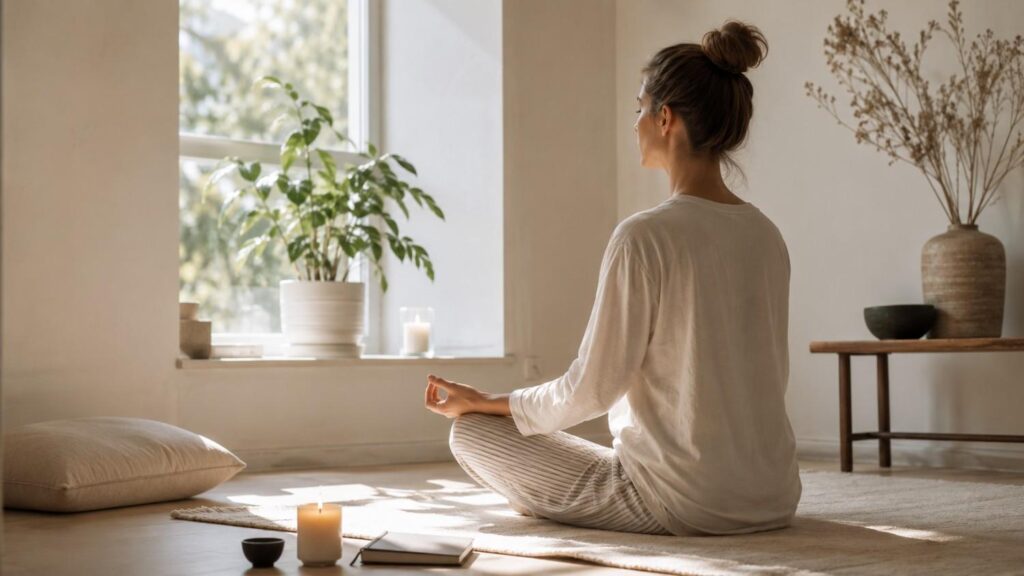
How to Start a Daily Meditation Practice: A Simple Beginner’s Guide
Learning how to start a daily meditation practice can feel overwhelming when you are new to mindfulness, breathing exercises, or quiet self-reflection. Many beginners assume meditation means sitting perfectly still, clearing the mind completely, or practicing for long periods without distraction. That idea makes meditation feel difficult before you even begin. In reality, meditation is much more practical and accessible. It is a simple mind-body practice that trains attention, awareness, and emotional steadiness.
A daily meditation practice does not require a spiritual background, expensive tools, or a complicated schedule. You can start with a chair, a timer, and a few quiet minutes. The goal is not to force your mind into silence. The goal is to notice where your attention goes and gently bring it back to the present moment.
In my experience, the most successful beginner meditation routine is the one that feels easy enough to repeat. If meditation becomes another stressful task, it will be hard to maintain. But when it becomes a short daily pause, it can support calm, focus, and self-awareness in a natural way.
This guide explains how to start a daily meditation practice step by step. You will learn why meditation is helpful, which techniques work best for beginners, how long to meditate, how to stay consistent, and what mistakes to avoid. By the end, you will have a simple structure you can use today.
Why Start a Daily Meditation Practice?
A daily meditation practice gives your mind a regular opportunity to slow down, reset, and return to the present moment. Modern life often keeps the brain in a constant state of stimulation. Notifications, deadlines, responsibilities, conversations, and personal worries can all compete for attention. Meditation creates a short space where you are not trying to solve everything at once. Instead, you practice observing your thoughts, breath, body, and emotions with more clarity.
This is one reason meditation for beginners has become so popular. It offers a simple way to build awareness without needing complicated tools. A person can meditate at home, at work, in a quiet room, or even during a short break. Mayo Clinic describes meditation as a simple and fast way to reduce stress and restore calm, while Cleveland Clinic explains meditation as a practice that helps train attention and awareness.
Starting a daily meditation practice also helps you build a healthier relationship with your thoughts. Instead of reacting automatically to every worry or emotion, you learn to pause. That pause may seem small, but it can influence how you respond to stress, conversations, decisions, and daily challenges. Over time, meditation becomes less about the minutes spent sitting and more about the awareness you carry into everyday life.
Meditation Helps You Build Mental Space
Meditation helps create mental space by teaching you to notice thoughts without immediately reacting to them. Most people spend much of the day moving from one thought to another without realizing it. A small worry can turn into overthinking. A stressful email can affect your mood for hours. A negative thought can feel like a fact. Meditation interrupts that automatic pattern by giving you a chance to observe what is happening in your mind.
During meditation, you may notice planning thoughts, memories, doubts, emotions, or distractions. This does not mean you are doing anything wrong. In fact, noticing those thoughts is part of the practice. Each time you recognize that your mind has wandered and return to your breath, you strengthen attention. You also learn that thoughts can appear and pass without needing your immediate response.
This mental space is useful beyond meditation. It can help you pause before reacting, listen more carefully, and respond to situations with greater awareness. The benefit is not that life becomes perfectly calm. The benefit is that you become more skillful in how you meet life.
Daily Practice Works Better Than Occasional Effort
Daily practice is important because meditation works best when it becomes familiar. A long session once in a while may feel relaxing, but it does not build the same rhythm as a short routine repeated regularly. Beginners often make the mistake of starting with a large goal, such as meditating for 30 minutes every morning. While that may sound impressive, it can quickly become unrealistic when life gets busy.
A better approach is to start small and repeat the habit daily. Even two to five minutes can help you build the identity of someone who meditates. Once the habit feels natural, increasing the length becomes easier. This is similar to physical exercise. A person who walks for five minutes every day is often more likely to continue than someone who plans a difficult workout and gives up after a few attempts.
Consistency also removes pressure. When meditation becomes part of your daily rhythm, you stop waiting for the perfect mood, perfect room, or perfect time. You simply show up, practice briefly, and continue your day with more awareness.
Meditation Can Support Stress Management
Meditation is often used as part of stress management because it encourages the body and mind to slow down. When you sit quietly and focus on breathing, you give your nervous system a chance to settle. This does not mean meditation removes every source of stress. Work, relationships, health, finances, and responsibilities still require practical action. However, meditation can help you approach those responsibilities from a calmer and clearer place.
The CDC includes meditation and deep breathing among activities that may help people make time to unwind and manage stress. Mayo Clinic also notes that meditation may help restore calm and inner peace. These claims should be understood properly. Meditation is not a replacement for medical treatment, therapy, sleep, movement, or healthy support systems. It is one helpful practice that can work alongside them.
For beginners, stress relief meditation can be as simple as pausing for five minutes and noticing the breath. The practice may feel ordinary at first, but repeated regularly, it can become a reliable reset during demanding days.
How to Start a Daily Meditation Practice Step by Step
If you want to understand how to start a daily meditation practice, the most important principle is simplicity. Beginners do not need advanced techniques, long silent retreats, or perfect concentration. They need a clear starting point that feels realistic. A daily meditation practice begins with three basic decisions: when you will meditate, where you will sit, and what you will focus on.
The first few days should be easy on purpose. Your job is not to become an expert immediately. Your job is to create a repeatable routine. If the practice feels too difficult, your brain may begin to resist it. But if it feels simple and manageable, you are more likely to return the next day.
A practical beginner meditation routine might include sitting for three minutes after waking up, focusing on the breath, and gently returning whenever the mind wanders. That is enough to begin. Over time, you can add more minutes, try guided meditation, or explore mindfulness meditation more deeply. But the foundation should remain simple.
The steps below will help you create a routine that is clear, calm, and easy to maintain. Follow them in order for the first week before making changes.
| Week | Daily Time | Main Focus | Goal |
|---|---|---|---|
| Week 1 | 2–5 minutes | Notice your breathing | Build the habit of meditating every day |
| Week 2 | 5–7 minutes | Return to the breath when distracted | Improve attention and consistency |
| Week 3 | 7–10 minutes | Observe thoughts without judgment | Increase mindfulness and awareness |
| Week 4 | 10–15 minutes | Practice calm, focused attention | Create a sustainable daily meditation routine |
Step 1: Choose a Simple Time and Place
The first step is choosing a time and place that fit naturally into your life. Many people choose morning meditation because it helps them begin the day with more focus before emails, messages, and responsibilities start competing for attention. Others prefer evening meditation because it helps them release the mental noise of the day. There is no universal best time to meditate. The best time is the one you can repeat consistently.
Your meditation space does not need to be silent or perfectly designed. A bedroom corner, office chair, living room floor, or quiet outdoor space can work. What matters most is that the place feels safe enough for you to sit without unnecessary interruption. If you live with family or roommates, let them know you are taking a few quiet minutes.
Try to keep the location consistent for the first week. Repeating the same place helps your brain associate that space with slowing down. You can use a cushion, chair, or folded blanket, but comfort matters more than appearance. Sit in a way that allows you to stay relaxed and alert.
Step 2: Start With 2–5 Minutes
Many beginners ask how long they should meditate, and the answer is usually shorter than they expect. Starting with 2–5 minutes is enough. A short session lowers resistance and makes the habit easier to complete. If you start with 20 minutes and feel restless, you may quickly decide meditation is not for you. But if you start with three minutes, success feels possible.
Set a timer so you do not need to check the clock. Sit comfortably, rest your hands, relax your shoulders, and allow your breathing to stay natural. You do not need to breathe in a special way at first. Simply notice the inhale and exhale. If it helps, silently count each breath up to five and then start again.
The goal is not to create a dramatic experience. The goal is to practice returning. When the timer ends, take one slow breath, notice how you feel, and continue your day. This small ending helps your meditation feel complete.
Step 3: Expect Your Mind to Wander
Your mind will wander during meditation. This is not a problem; it is part of the process. Many beginners think they are failing because they keep thinking about work, family, tasks, or random memories. In truth, noticing that the mind has wandered is one of the most important moments in meditation. That moment shows awareness.
When you notice a thought, do not criticize yourself. You can simply say in your mind, “thinking,” and return to your breath. This gentle return is the heart of mindfulness practice. Every return strengthens your ability to notice distraction and come back to the present.
It may help to compare meditation to training a puppy. The mind wanders, and you bring it back kindly. You do not need to drag it back with frustration. You guide it with patience. Over time, this attitude becomes valuable outside meditation too. You become less harsh with yourself and more capable of beginning again.
Best Meditation Techniques for Beginners
Beginners often feel confused because there are many meditation techniques available. Some focus on breathing, some use guided audio, some involve body awareness, and others include mantras, visualization, compassion, or walking. While variety can be helpful later, it can be overwhelming in the beginning. The best approach is to choose one simple technique and practice it for several days before trying something new.
Meditation for beginners should feel clear, not complicated. If you keep changing techniques every day, you may spend more time searching than practicing. A stable method helps you understand what meditation feels like and how your mind responds. Once you build confidence, you can explore other styles.
The three beginner-friendly techniques below are useful because they are practical, accessible, and easy to adapt. Breathing meditation helps you develop focus. Guided meditation gives structure when silence feels difficult. Body scan meditation supports relaxation and body awareness. Each method can be part of a daily meditation practice, depending on your goal and schedule.
I recommend trying one technique for a full week. After that, you can decide whether to continue, adjust the timing, or add another method.
Breathing Meditation
Breathing meditation is one of the simplest and most reliable techniques for beginners. It uses the natural breath as the focus point. You do not need to force deep breathing or control each inhale and exhale. Instead, you observe the breath as it moves in and out. You might notice air passing through the nose, the chest rising and falling, or the belly gently expanding.
This technique works well because the breath is always present. You can practice it at home, during a work break, before a difficult conversation, or while waiting quietly. Whenever the mind wanders, you return to the breath. That return is the practice.
To begin, sit comfortably and place your attention on one part of the breathing process. If your mind feels busy, count each exhale from one to five and then begin again. If counting becomes distracting, drop the count and simply feel the breath. Breathing meditation is especially useful for building focus and calm awareness.
Guided Meditation
Guided meditation is helpful for beginners who feel unsure what to do in silence. In guided meditation, a teacher, app, audio recording, or video leads you through the session. The guide may ask you to notice your breath, relax your body, observe your thoughts, or focus on a specific theme such as gratitude, stress relief, sleep, or self-compassion.
This structure can make meditation feel easier because you are not left wondering what should happen next. It also helps people who become restless or distracted during silent practice. A calm voice can act like a steady anchor.
However, guided meditation should support the habit, not become a distraction. Beginners sometimes spend too much time searching for the perfect app, voice, or video. A better approach is to choose one short guided meditation and repeat it for a week. Repetition helps the mind settle into a familiar pattern. Once you feel more comfortable, you can explore different styles and session lengths.
Body Scan Meditation
Body scan meditation focuses on physical sensations. Instead of using only the breath, you slowly move attention through different parts of the body. You might begin with the top of the head, then notice the forehead, jaw, shoulders, chest, hands, stomach, legs, and feet. The goal is not to force relaxation but to notice sensations with gentle awareness.
This method is useful for people who carry stress in the body. Many beginners do not realize how much tension they hold in the jaw, shoulders, back, or stomach until they pause and observe. A body scan can help you reconnect with physical signals and soften unnecessary tension.
Body scan meditation can work well in the evening because it encourages a slower rhythm. You can practice while sitting or lying down, although lying down may make some people sleepy. If you use it before bed, that may be perfectly fine. If you use it during the day, stay seated to remain alert.
Beginner Meditation Routine Comparison Table
A beginner meditation routine should match your lifestyle, energy level, and reason for practicing. Some people want meditation for focus. Others want stress relief, emotional balance, better sleep, or a simple daily pause. Choosing the right routine helps you stay consistent because the practice feels relevant to your needs.
The table below compares simple meditation options for beginners. Use it as a practical guide rather than a strict rule. You may begin with one routine and later adjust it. For example, morning breathing meditation may work well on weekdays, while evening body scan meditation may feel better on weekends. Flexibility can help you continue without feeling like you failed.
The most important point is to avoid overplanning. You do not need a perfect meditation schedule before you begin. Choose one routine, practice it for seven days, and observe how it fits into your life. If it feels too long, shorten it. If it feels too easy, keep it easy until the habit is stable. Meditation consistency matters more than intensity.
| Routine Type | Best For | Time Needed | How to Practice | Beginner Tip |
|---|---|---|---|---|
| Morning breathing meditation | Focus and calm start | 3–5 minutes | Sit and notice your breath | Practice before checking your phone |
| Lunch break reset | Work stress | 2–4 minutes | Breathe slowly and relax shoulders | Use a timer |
| Evening body scan | Relaxation and sleep support | 5–10 minutes | Notice each body area slowly | Practice away from bright screens |
| Guided meditation | Beginners needing structure | 5–10 minutes | Follow an audio guide | Repeat the same guide for a week |
| Walking meditation | Restless beginners | 5–10 minutes | Notice each step and breath | Walk slowly without multitasking |
Choose the Routine That Feels Easiest
The best beginner meditation routine is usually the one that feels easiest to repeat. This may sound too simple, but it is one of the most important habit-building principles. If your routine requires too much effort, time, or preparation, it becomes easier to skip. If it fits naturally into your day, you are more likely to continue.
For example, if you wake up with a busy mind, a short morning breathing meditation may be helpful. If you feel overwhelmed during work, a lunch break reset may be more realistic. If your body feels tense at night, a body scan may be the better choice. Restless beginners may prefer walking meditation because it includes gentle movement.
Do not choose a routine because it sounds more advanced. Choose the one that removes friction. In my experience, people who start with an easy routine often build stronger long-term consistency than people who begin with an ambitious plan.
Keep Your First Week Very Simple
Your first week of meditation should be focused on completion, not performance. The goal is to show up daily and become familiar with the practice. You do not need deep calm, perfect focus, or a special experience. You simply need to sit, breathe, notice distractions, and return.
A useful first-week plan is to meditate for three minutes at the same time each day. Mark each completed session on a calendar, notebook, or habit tracker. This gives you a visible sense of progress and reinforces the identity of someone who practices daily.
Avoid changing too many details during the first week. Keep the same time, place, and technique if possible. This reduces decision fatigue. Once the habit feels stable, you can increase the time or experiment with other styles. A simple first week builds the foundation for a stronger daily meditation practice later.
How to Make Meditation a Daily Habit
Starting meditation is important, but staying consistent is where many beginners struggle. Motivation may be high on the first day, but it naturally changes. Some mornings feel busy. Some evenings feel tiring. Some days you may not feel calm enough to sit. This is why a meditation habit needs structure, not just motivation.
A daily meditation practice becomes easier when it is attached to your existing routine. Instead of asking, “When should I meditate today?” you create a clear answer in advance. For example, “I meditate after brushing my teeth” or “I meditate before opening my laptop.” That simple structure removes the need to decide every day.
It also helps to keep the habit small. A short session practiced daily is more useful than a long session you rarely complete. Beginners often underestimate the power of small actions. Two focused minutes can keep the habit alive, especially on difficult days.
The strategies below will help you turn meditation from a good idea into a realistic daily practice. They are simple, but they work because they reduce friction and make consistency easier.
| Habit to Build | Why It Helps | Beginner Tip |
|---|---|---|
| Meditate at the same time each day | Builds routine and consistency | Link meditation to your morning or evening schedule |
| Use a timer | Prevents checking the clock | Start with a 3–5 minute session |
| Choose one meditation technique | Reduces confusion | Practice the same technique for one week |
| Accept wandering thoughts | Makes meditation less frustrating | Gently return your attention to your breath |
| Track your practice | Reinforces the habit | Mark each completed session on a calendar or habit tracker |
| Keep expectations realistic | Encourages long-term consistency | Focus on showing up rather than achieving a perfect session |
Attach Meditation to an Existing Habit
One of the most effective ways to build a meditation habit is to attach it to something you already do every day. This is often called habit stacking. Instead of trying to create a completely new routine from nothing, you connect meditation to a current behavior that already happens automatically.
For example, you might meditate after brushing your teeth, before drinking coffee, after morning prayer, after journaling, or before getting into bed. The existing habit becomes the reminder. You do not need to rely on memory or motivation because the trigger is already built into your day.
Be specific when creating this connection. Instead of saying, “I will meditate in the morning,” say, “I will meditate for three minutes after brushing my teeth.” This clear statement makes the habit easier to follow. It also reduces mental negotiation. You know exactly when meditation happens.
Over time, the connection becomes natural. Your brain begins to associate the old habit with the new one, making meditation easier to begin.
Use a Small Minimum Goal
A small minimum goal protects your meditation habit on busy or difficult days. Many people quit because they believe meditation only counts if it lasts 15, 20, or 30 minutes. That mindset creates unnecessary pressure. A better rule is to set a minimum that is easy to complete even when your schedule is full.
For beginners, a good minimum goal is two minutes. You can always meditate longer, but two minutes keeps the habit alive. This approach helps you avoid the all-or-nothing trap. A short session is not a failure. It is a successful repetition.
Small goals also reduce resistance. When the brain hears “two minutes,” it is less likely to argue. Once you begin, you may naturally continue for longer. But even if you stop when the timer ends, you have still practiced awareness, breathing, and consistency.
This matters because meditation grows through repetition. The habit becomes stronger every time you keep the promise, even in a small way.
Create a Calm Practice Cue
A practice cue is a small signal that tells your mind and body it is time to slow down. This cue can be simple. It might be sitting in the same chair, using the same cushion, lighting a candle, closing a door, setting a timer, or playing a soft bell sound. The cue does not need to be expensive or complicated. Its value comes from repetition.
When you use the same cue regularly, your brain begins to associate it with meditation. This makes it easier to enter the practice. The cue becomes a bridge between normal daily activity and a calmer state of attention.
A calm practice cue can also make the routine feel more intentional. Instead of dropping into meditation randomly, you create a clear beginning. That beginning helps you transition away from distractions. For example, placing your phone on silent, sitting upright, and taking one deep breath can become a short ritual.
The more consistent your cue, the more natural your daily meditation practice will feel.
Common Meditation Mistakes Beginners Should Avoid
Meditation is simple, but that does not mean beginners always find it easy. Most early challenges come from unrealistic expectations. People think they need a blank mind, a peaceful mood, a perfect posture, or immediate results. When their real experience does not match that image, they assume they are doing something wrong.
The truth is that meditation often feels ordinary. Some sessions feel calm, while others feel distracted or uncomfortable. Both are part of the process. A successful meditation practice is not measured by how peaceful every session feels. It is measured by your willingness to return, observe, and continue.
Avoiding common beginner mistakes can make the practice more sustainable. You do not need to force progress. You need to create conditions that make meditation easier to repeat. This means starting small, staying patient, and understanding what meditation is actually training.
The mistakes below are common, but they are also easy to correct. Once you understand them, you can approach your daily meditation practice with more confidence and less frustration.
Trying to Empty the Mind Completely
One of the most common meditation mistakes is trying to empty the mind completely. Beginners often sit down and expect thoughts to stop. When thoughts continue, they feel disappointed. This misunderstanding makes meditation feel like a battle against the mind.
Meditation is not about forcing the mind to go blank. It is about noticing what the mind is doing. Thoughts, emotions, images, plans, and memories may all appear during practice. Your job is not to push them away. Your job is to notice them and return to your chosen focus point, such as the breath.
This shift changes everything. Instead of thinking, “I failed because I had thoughts,” you can think, “I noticed my thoughts and returned.” That is meditation. Every return is a moment of awareness.
Trying to control the mind usually creates tension. Observing the mind with patience creates learning. This is why gentle attention is more useful than force.
Starting With Sessions That Are Too Long
Another common mistake is beginning with sessions that are too long. A person may feel inspired and decide to meditate for 20 or 30 minutes on the first day. While that may work for some, many beginners find it difficult. The body becomes restless, the mind gets frustrated, and the practice begins to feel like a chore.
Starting small is usually smarter. A three-minute session is not too short if it helps you practice daily. Once that feels comfortable, you can increase to five, seven, or ten minutes. This gradual approach builds confidence.
Longer sessions are not automatically better. A distracted 30-minute session done once a month will not build the same habit as a focused five-minute session practiced daily. The purpose at the beginning is consistency.
Think of short sessions as foundation work. You are teaching your mind that meditation is safe, simple, and repeatable. That foundation makes longer practice easier later.
Judging Every Session
Many beginners judge each meditation session too quickly. They ask, “Was that good?” or “Did I feel calm?” If the session felt restless, they assume it did not work. This creates pressure and can make the practice discouraging.
Meditation is not always relaxing in the moment. Sometimes sitting quietly reveals how busy, tired, or emotional you feel. That awareness can be uncomfortable, but it is still valuable. A session where you notice restlessness may be just as useful as a session where you feel peaceful.
Progress often appears outside the session. You may pause before reacting, notice stress sooner, listen more carefully, or recover from frustration faster. These changes are easy to miss if you only judge meditation by how calm you feel while sitting.
A better question is, “Did I show up and practice returning?” If the answer is yes, the session counted. This mindset supports long-term meditation consistency.
How to Know Your Meditation Practice Is Working
Meditation progress is often subtle. Unlike some habits where results are obvious, meditation changes how you relate to thoughts, emotions, and stress over time. You may not finish a session feeling dramatically different, especially in the beginning. That does not mean nothing is happening.
A daily meditation practice works by training awareness through repetition. Each time you sit, notice, and return, you strengthen the ability to pay attention. Over time, this can influence how you move through ordinary situations. You may become more aware of stress before it grows. You may notice unhelpful thought patterns sooner. You may respond with more patience in moments that used to trigger quick reactions.
It is also important to understand that meditation is not a cure-all. It is a supportive practice. It can work alongside healthy sleep, movement, therapy, medical care, meaningful relationships, and practical problem-solving. If you experience severe anxiety, depression, trauma symptoms, or other serious concerns, professional support is important.
The signs below can help you recognize progress without expecting perfection. Look for small changes in awareness, recovery, and consistency.
You Notice Thoughts More Clearly
One sign that meditation is working is that you begin to notice thoughts more clearly. Instead of being completely absorbed in a worry or reaction, you may recognize, “I am thinking about the future,” or “I am replaying that conversation again.” This awareness creates distance between you and the thought.
That distance is powerful. It does not make the thought disappear, but it gives you more choice. You can decide whether the thought needs action, reflection, or simply acknowledgment. This is a key part of mindfulness meditation.
For example, before practicing meditation, a stressful thought might control your mood for hours. After regular practice, you may still have the thought, but you recognize it sooner. You may take a breath, return to the present, and choose a calmer response.
This kind of progress can feel small, but it is meaningful. Clearer awareness is one of the main skills meditation develops.
You Recover From Stress Faster
Another sign of progress is faster recovery from stress. Meditation does not prevent stressful events from happening. You may still face deadlines, disagreements, uncertainty, or emotional moments. However, you may notice that you return to balance more quickly than before.
This happens because meditation gives you practice in pausing. During meditation, you repeatedly notice distraction and return to the breath. In daily life, that same skill may help you notice stress and return to steadiness. You might take a breath before replying, step away for a moment, or recognize that your body is tense.
Stress recovery is often more realistic than stress elimination. A healthy goal is not to never feel stress. A healthier goal is to recognize stress earlier and respond with more care.
If you notice even a small pause between a trigger and your reaction, your daily meditation practice may already be helping.
You Become More Consistent
Consistency itself is a sign that your meditation practice is working. Many beginners focus only on how each session feels, but the habit of returning daily is a major achievement. When you practice regularly, meditation becomes part of your identity and routine.
You may notice that you no longer debate whether to meditate. You simply sit down because it is part of your day. This shift shows that the habit is becoming stable. It also means you are less dependent on motivation.
Consistency does not mean perfection. Missing a day does not erase your progress. What matters is returning the next day without turning one missed session into a full stop. A strong meditation habit includes flexibility and self-kindness.
If you are practicing most days, even for a short time, you are building the foundation. The benefits of meditation often grow from this steady repetition.
Quick Answer About How to Start a Daily Meditation Practice
To start a daily meditation practice, begin with a short and realistic routine instead of trying to meditate for a long time right away. Choose a quiet place, sit comfortably, set a timer for 2–5 minutes, and focus on your natural breathing. When your mind wanders, which it will, gently bring your attention back to the breath without judging yourself. This simple return is the core skill of meditation.
The easiest way to stay consistent is to connect meditation with something you already do every day, such as waking up, brushing your teeth, making tea, or getting ready for bed. Beginners should focus more on consistency than session length. A short daily session practiced regularly is usually more effective than an occasional long session. Over time, you can increase your practice to 10–15 minutes if it feels helpful. You do not need special equipment, a perfect mindset, or a completely silent room. You only need a small amount of time, a clear focus point, and a willingness to begin again each day.
Frequently Asked Questions
This FAQ section answers common beginner questions using simple, direct explanations. Many people search for meditation guidance because they want reassurance before starting. They wonder how long to meditate, what to think about, when to practice, and whether meditation is supposed to feel difficult. These are normal questions, especially if you are building a routine for the first time.
The key thing to remember is that meditation is a practice, not a performance. You do not need to master everything before beginning. You can learn through experience. Start with a short session, observe what happens, and adjust gradually. If your mind wanders, you are still practicing. If you feel restless, you are still practicing. If the session feels simple, that is fine too.
Use the answers below as practical guidance. They are designed to help you begin with confidence and avoid the pressure that often stops beginners from continuing.
How do I start meditating every day?
To start meditating every day, choose a small routine that feels easy to repeat. Sit comfortably, set a timer for 2–5 minutes, and focus on your breathing. When your mind wanders, gently return to the breath. The most important part is not staying perfectly focused. The most important part is coming back.
Connect meditation with an existing habit so you do not need to remember it from scratch. For example, meditate after brushing your teeth, before morning coffee, or before going to bed. Keep the same time and place for the first week if possible. This helps the routine feel familiar. If you miss a day, do not criticize yourself. Simply restart the next day. Daily meditation grows through patience, repetition, and realistic expectations.
How long should beginners meditate?
Beginners can start with 2–5 minutes of meditation per day. This may seem short, but it is enough to begin training attention and building the habit. Starting small makes the practice easier to repeat, which is especially important in the early stage. A short daily session is often better than a long session done only once in a while.
Once five minutes feels comfortable, you can slowly increase to 10 minutes. Some people later choose 15 or 20 minutes, but longer is not required for everyone. The right length depends on your schedule, comfort, and goal. If you feel restless, reduce the time instead of quitting. Meditation should challenge your attention gently, not feel like punishment. Consistency matters more than duration, especially for beginners.
What is the best time to meditate daily?
The best time to meditate daily is the time you can practice consistently. Morning meditation works well for people who want to begin the day with focus and calm. It can also help because fewer distractions have appeared yet. Evening meditation may be better for people who want to release stress, slow down, or prepare for rest.
Some people prefer a midday reset, especially if work or family responsibilities make mornings and evenings unpredictable. There is no single perfect time. The best time is the one that fits your real schedule. Try one time for a week before changing it. If you keep missing sessions, that is useful feedback. Choose a time with less friction. Meditation works best when it becomes part of your life, not another unrealistic task.
Is guided meditation good for beginners?
Yes, guided meditation is very helpful for beginners. It gives structure and support when you are not sure what to do in silence. A guided session may lead you through breathing, body awareness, relaxation, gratitude, or mindfulness. This can make meditation feel less confusing and more approachable.
Guided meditation is especially useful if your mind feels very active or if silent sitting makes you uncomfortable at first. However, it is best to keep the process simple. Choose one short guided meditation and repeat it for several days. Avoid spending too much time searching through apps, videos, or recordings. The benefit comes from practicing, not from finding the perfect guide. As you gain confidence, you can continue with guided sessions or slowly try silent breathing meditation.
What should I think about while meditating?
During meditation, you do not need to think about anything special. In most beginner practices, the goal is to focus on one simple anchor, such as the breath, body sensations, or a guided instruction. Thoughts will still appear. When they do, notice them and gently return to your anchor.
You do not need to fight thoughts, analyze them, or force them away. If you notice that you are planning, remembering, worrying, or judging, that moment of noticing is part of meditation. You can silently label it as “thinking” and come back to the breath. This approach trains awareness without creating pressure. Over time, you may become more comfortable observing thoughts instead of getting pulled into every one. That is one of the most useful skills meditation develops.
Can meditation help with stress?
Meditation can support stress management by helping you slow down, notice your reactions, and return to the present moment. When practiced regularly, it may help you become more aware of tension in the body and repetitive thoughts in the mind. That awareness can make it easier to respond to stress with more calm and clarity.
However, meditation should not be treated as a complete solution for every type of stress. Practical problems may still need practical action. Serious mental health concerns may require professional support. Meditation works best as one part of a healthy lifestyle that may also include sleep, movement, therapy, social support, and medical care when needed. For everyday stress, a short breathing meditation can be a simple and useful reset.
Why is meditation hard at first?
Meditation is hard at first because most people are used to constant mental activity and external stimulation. Sitting quietly may reveal how busy the mind really is. You may notice worries, restlessness, boredom, physical tension, or impatience. This can feel uncomfortable, but it does not mean you are failing.
Meditation also challenges the habit of always doing something. Many people are used to checking phones, solving problems, or moving quickly from one task to another. A few quiet minutes can feel unfamiliar. The solution is to start small and stay patient. Do not expect instant calm. Instead, treat each session as practice. Over time, the mind may still wander, but your relationship with that wandering becomes gentler and more aware.
Conclusion
Starting a daily meditation practice is one of the simplest ways to build more awareness, calm, and mental clarity into everyday life. You do not need a perfect environment, an empty mind, or a long session to begin. You only need a few quiet minutes, a comfortable position, and a clear focus point such as the breath.
The best way to learn how to start a daily meditation practice is to begin small. Choose a time, sit in the same place, set a timer for 2–5 minutes, and return gently whenever your mind wanders. As the routine becomes easier, you can increase the length, try guided meditation, explore body scan meditation, or add walking meditation when helpful.
What matters most is consistency. A short practice repeated daily can become a meaningful habit over time. Some days will feel calm. Other days will feel distracted. Both are part of the process. If you keep returning, you are practicing correctly.
Use this guide as a starting point, not a strict rulebook. Begin with the easiest version today, and let your practice grow naturally.