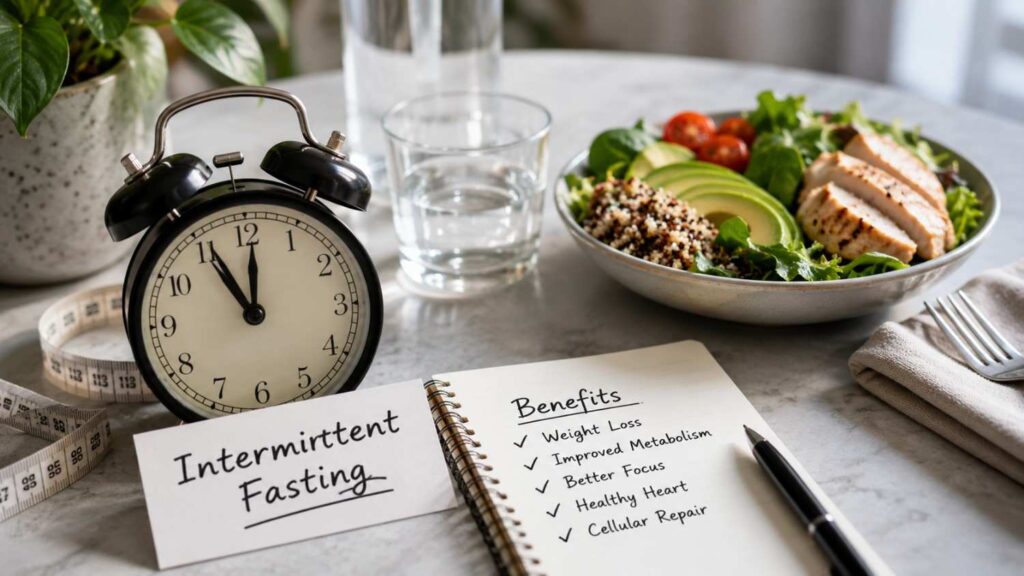
The Benefits of Intermittent Fasting: What the Science Really Says
Intermittent fasting has become one of the most widely discussed eating patterns for weight management and metabolic health. Unlike a traditional diet that focuses mainly on which foods to choose or avoid, intermittent fasting primarily changes when you eat. Periods of normal food intake alternate with planned fasting windows that can range from a simple overnight fast to more structured approaches such as 16:8 time-restricted eating, 5:2 fasting or alternate-day fasting. The method is flexible, but the physiological and practical effects differ according to the schedule used.
Interest in the benefits of intermittent fasting has grown partly because the approach can feel simpler than constant calorie tracking. It does not require branded products, special supplements or a complicated list of forbidden foods. For some people, defining an eating window naturally removes late-night snacks or extra meals and creates a manageable calorie deficit. That simplicity, however, should not be confused with metabolic superiority. Large reviews increasingly suggest that fasting and conventional calorie restriction often produce similar overall results when energy intake and adherence are comparable.
The science is therefore more nuanced than many social-media claims imply. Intermittent fasting can be effective, but outcomes depend on total calorie intake, food quality, fasting duration, sleep, exercise, medication use, health status and the ability to follow the routine without excessive hunger or nutritional compromise. This guide explains where evidence is strongest, where uncertainty remains, how common fasting schedules differ and who should seek medical advice before changing meal timing.
What Is Intermittent Fasting and How Does It Work?
Intermittent fasting is an umbrella term for eating patterns that deliberately alternate periods of food intake with periods of little or no calorie consumption. Rather than prescribing a single menu, it changes the timing or frequency of eating. NIDDK discusses time-restricted eating and alternate-day fasting among the major approaches studied in clinical research. Other common patterns include 5:2 fasting and modified fasting days. The important point is that these approaches create different fasting durations, calorie deficits and levels of difficulty, so they should not be treated as identical interventions.
After a meal, the body uses incoming glucose, fatty acids and amino acids for immediate needs and storage. As the fasting period continues and recently consumed energy becomes less available, insulin generally declines and the body relies more heavily on stored fuels. Johns Hopkins describes part of this transition as metabolic switching. The process is gradual rather than instantaneous, and the timing varies according to the previous meal, activity, liver glycogen, metabolic health and other individual factors. There is no universal hour when everyone suddenly begins “burning fat.”
Understanding these basics helps separate physiology from marketing claims. Fasting changes the pattern of fuel availability, but weight loss still depends heavily on the balance between energy consumed and energy used over time. Meal timing may also interact with circadian rhythms, hunger hormones and glucose regulation, which is why researchers continue to study whether earlier eating windows offer advantages for some people. The practical effect of any method depends on both its biology and whether the person can maintain it safely.
Common intermittent fasting schedules
The popular 16:8 intermittent fasting method places meals within an eight-hour eating window and leaves about 16 hours without calories, often including the overnight period. Some people begin with a less restrictive 12:12 or 14:10 routine before shortening the eating window. Johns Hopkins describes daily eating windows of roughly six to eight hours as a common form of time-restricted eating studied and used in practice.
Other approaches change calorie intake across the week rather than every day. 5:2 fasting generally involves regular eating on five days and substantially reduced intake on two days. Alternate-day fasting alternates higher-intake days with fasting or very-low-calorie days. A 4:3 approach uses three reduced-intake days each week. These methods differ in hunger, convenience, social impact and the size of the calorie deficit they create.
There is no universally proven “best” schedule for every adult. A useful plan needs to fit work, sleep, exercise, medication timing, family meals and personal preferences. Longer fasting is not automatically more effective. Johns Hopkins specifically cautions that extended 24-, 36-, 48- or 72-hour fasts are not necessarily better and may create avoidable risks, particularly when attempted without professional supervision.
| Fasting Method | Eating Window | Fasting Period | Best For |
|---|---|---|---|
| 12:12 Method | 12 hours | 12 hours | Beginners |
| 16:8 Method | 8 hours | 16 hours | Weight management |
| 5:2 Diet | 5 normal days | 2 low-calorie days | Flexible dieting |
| Alternate-Day Fasting | Every other day | Full fasting days | Experienced users |
What happens metabolically while fasting?
After a meal, insulin rises in response to absorbed nutrients and helps direct glucose toward immediate use or storage. During the following hours, the body gradually moves away from relying on recently eaten food. Liver glycogen helps maintain blood glucose, and as fasting continues, fat mobilisation becomes more important. These normal shifts in fuel use are one reason researchers are interested in intermittent fasting for metabolic health.
That physiology does not remove the importance of total energy intake. NIDDK researchers note that people following time-restricted eating often lose weight because the shorter eating period naturally reduces how much they consume. If someone compensates for a long fast by eating very large, calorie-dense meals, the expected weight-loss benefit may disappear. Fasting changes timing, but it does not override basic energy balance.
Meal timing may also interact with the body’s circadian system. Glucose tolerance, hormone secretion, sleep and appetite follow daily rhythms, and some controlled studies suggest that eating earlier may produce stronger glucose or blood-pressure effects than very late eating. Researchers are still determining how large those differences are and which people benefit most, so the evidence supports flexibility rather than one universal clock-based prescription.
What Are the Main Health Benefits of Intermittent Fasting?
Most clinically relevant intermittent fasting benefits involve body weight and cardiometabolic health rather than dramatic detoxification or disease cures. Weight, insulin resistance, blood glucose, blood pressure and blood lipids are closely connected, so an eating pattern that helps a person reduce excess energy intake may influence several markers at the same time. This is one reason fasting studies often report clusters of changes rather than one isolated effect. The size of those improvements varies by starting health, amount of weight lost, fasting schedule and duration of the intervention.
Reviews of potential fasting benefits commonly include weight management and improvements in several metabolic markers, although the strength of evidence differs across individual outcomes.
| Health Outcome | Evidence Strength | Human Research Support |
|---|---|---|
| Weight Loss | Strong | Multiple clinical trials |
| Insulin Sensitivity | Moderate to Strong | Good evidence |
| Blood Sugar Control | Moderate | Supported in some populations |
| Blood Pressure | Moderate | Short-term studies |
| Cholesterol Improvement | Moderate | Variable findings |
| Autophagy | Limited | Mostly animal studies |
| Longevity | Limited | More human research needed |
Mayo Clinic summarises short-term research showing possible improvements in weight, blood sugar, blood pressure, cholesterol and some markers related to inflammation. The important qualification is that conventional calorie restriction can produce many of the same outcomes. Large comparative reviews reinforce this point: intermittent fasting works for many participants, but its average results are usually similar to other structured ways of reducing energy intake. Therefore, the meaningful question is often not whether fasting is metabolically “better,” but whether it is easier for a particular person to sustain.
The evidence also differs substantially by outcome. Weight loss and common metabolic markers have been studied in numerous randomised trials. Long-term disease prevention, dementia risk, cancer outcomes and lifespan are much harder to establish and remain less certain. Readers should therefore give greater weight to clinically measured outcomes than to speculative claims. The table below summarises the overall strength of the main areas discussed in this article.
| Potential outcome | What current evidence suggests | Important limitation |
|---|---|---|
| Weight loss | Can produce modest weight loss | Usually similar to continuous calorie restriction |
| Insulin resistance | May improve in some groups | Weight loss itself may explain part of the effect |
| Blood glucose | Can improve in selected populations | Medication users require medical supervision |
| Blood pressure/lipids | Small improvements are reported in some trials | Long-term cardiovascular outcomes remain uncertain |
| Autophagy/longevity | Biologically plausible and actively studied | Direct human outcome evidence is limited |
Weight loss and easier calorie control
One of the clearest potential benefits is weight management. A shorter eating window can remove opportunities for late-night snacks, extra meals or habitual grazing, which may lower total calorie intake without detailed tracking. Harvard researcher Courtney Peterson has described trials in which daily time-restricted eating reduced energy intake and supported modest weight loss. For people who dislike logging food, a simple start-and-stop time can feel easier to manage.
Still, intermittent fasting for weight loss is not consistently superior to traditional dieting. The 2025 BMJ network meta-analysis included 99 randomised clinical trials involving 6,582 adults and found that fasting strategies and continuous energy restriction produced broadly similar weight and cardiometabolic results overall. Alternate-day fasting showed a modest weight-loss advantage in some comparisons, but the differences between approaches were generally small rather than transformative.
Harvard fasting research also highlights potential benefits involving weight control and metabolic health, while noting that the evidence varies depending on the fasting approach and outcome.
The practical advantage may therefore be adherence. A person who finds an eight-hour eating window simple may follow it more consistently than a calorie target that requires constant measuring. Someone else may become excessively hungry and overeat later. Sustainable weight management depends on the pattern creating a realistic calorie deficit while preserving adequate protein, fibre, micronutrients, physical activity and a healthy relationship with food.
Blood sugar and insulin sensitivity
Intermittent fasting may improve certain markers of glucose regulation, particularly in adults with overweight, obesity, prediabetes or type 2 diabetes. NIDDK discusses studies showing reductions in fasting insulin and improvements in insulin resistance, and some trials involving people with type 2 diabetes have reported improvements in HbA1c. Earlier time-restricted eating is also being studied because glucose handling follows daily circadian patterns.
These results require careful interpretation. Losing excess body weight can independently improve insulin sensitivity and glucose control, so researchers often have difficulty separating the effect of fasting itself from the effect of eating fewer calories. Sleep, exercise, meal composition and the timing of the eating window may also influence glucose responses. Fasting should therefore be seen as one possible tool within a broader metabolic-health strategy.
Medication safety is especially important. Insulin and some glucose-lowering medicines can cause hypoglycemia when food intake changes unexpectedly. NIDDK advises people with type 2 diabetes who use insulin or sulfonylureas to work closely with healthcare professionals when fasting. The goal is not simply to endure a longer fasting window; it is to improve health without creating avoidable episodes of low or high blood glucose.
Related Articles
Blood pressure and other cardiometabolic markers
Some fasting trials report modest improvements in blood pressure, triglycerides, cholesterol and other cardiometabolic risk markers. These changes are biologically plausible because weight loss, improved insulin sensitivity and changes in meal timing can influence several cardiovascular risk factors at once. The American Heart Association has discussed possible benefits of meal timing and fasting patterns while also emphasising the need for stronger long-term evidence.
Risk-factor improvements should not be confused with proven prevention of heart attacks, strokes or premature death. A study lasting several weeks can detect a change in blood pressure or fasting insulin, but it cannot establish what happens over decades. Long-term outcomes depend on many factors, including smoking, physical activity, genetics, sleep, medication adherence, food quality and existing cardiovascular disease.
Diet quality remains central regardless of the fasting schedule. An eight-hour eating window dominated by ultra-processed foods, excess sodium, saturated fat and oversized portions can undermine the potential benefits of meal timing. A more useful approach combines a sustainable eating window with vegetables, fruit, legumes, whole grains, healthy fats and adequate protein. Fasting can structure meals, but it cannot make a nutritionally poor diet automatically heart-healthy.
Does Intermittent Fasting Improve Autophagy, Inflammation and Longevity?
This is the area where discussions about fasting most often move beyond the strongest clinical evidence. Autophagy is a normal cellular recycling process through which cells break down and reuse damaged or unnecessary components. Nutrient availability influences pathways involved in autophagy, and fasting is one of several conditions that can affect those pathways. However, scientists do not currently have a clinically validated rule saying that a particular number of fasting hours reliably produces a specific amount of autophagy or a guaranteed health benefit in humans.
Animal, cellular and mechanistic studies have generated substantial interest in fasting, oxidative stress, cellular maintenance and aging biology. These experiments help researchers understand possible mechanisms, but they cannot automatically answer questions about human disease prevention or lifespan. A biological pathway may change during fasting without producing a meaningful clinical outcome years later. Human trials are expanding, yet long-term research capable of testing cancer prevention, dementia risk or lifespan directly is difficult and remains limited.
A responsible interpretation is therefore cautiously optimistic. Fasting may influence processes connected with cellular stress responses, inflammation and circadian biology, and those changes may eventually help explain some metabolic benefits. At present, however, the strongest reasons to consider intermittent fasting remain practical weight-management and cardiometabolic outcomes. Exercise, adequate sleep, smoking avoidance, blood-pressure control and a nutrient-dense diet have far more established roles in long-term health than claims about achieving a specific “autophagy window.”
Autophagy and cellular repair
Fasting-related autophagy is often described online as if a switch suddenly turns on after 16, 18 or 24 hours without food. Human biology is not that precise. Autophagy is already occurring at varying levels throughout the body, and its activity differs among tissues, metabolic states, ages and health conditions. Measuring it directly in living humans is also much more difficult than measuring it in laboratory cells or animal tissues.
Nutrient deprivation can influence molecular pathways associated with cellular recycling, which is why fasting is scientifically interesting. However, much of the detailed mechanistic evidence comes from cell culture and animal experiments. Those studies can show that fasting affects signaling pathways, but they cannot tell a person that a specific fasting duration will produce a clinically meaningful “cellular cleanse,” prevent disease or reverse biological aging.
The accurate message is more modest. Intermittent fasting may influence cellular maintenance and stress-response pathways, including processes related to autophagy. The exact fasting duration, intensity and frequency required to produce a specific human health outcome have not been established. Readers should be cautious with charts or social posts that promise precise autophagy milestones by the hour.
Inflammation, circadian rhythm and healthy aging
Some short-term studies report changes in inflammatory or oxidative-stress markers during intermittent fasting, and researchers are investigating whether those effects reflect weight loss, meal timing, fasting duration or a combination of factors. Mayo Clinic notes that inflammation-related markers may improve in some studies, while Harvard researchers continue to examine connections between time-restricted eating, oxidative stress, metabolic flexibility and biological measures associated with aging.
Circadian rhythm may be an important part of that research. The body’s glucose regulation, hormone release, sleep-wake cycle and digestive processes change across the day. Eating earlier may align food intake with periods when glucose handling is generally more efficient. However, an early schedule can be difficult for shift workers, families or people whose social life centres on evening meals, so ideal laboratory timing may not always be realistic.
Evidence that intermittent fasting extends human lifespan remains insufficient. Researchers can measure biomarkers related to aging far sooner than they can demonstrate a change in lifespan, and biomarkers are not the same as long-term clinical outcomes. Current findings are better described as promising evidence about metabolic and circadian processes rather than proof that fasting slows human aging or prevents age-related disease.
Is Intermittent Fasting Better Than Regular Calorie Restriction?
This question is central to understanding the benefits of intermittent fasting because many people assume that fasting must produce a unique metabolic advantage over eating fewer calories throughout the day. Current evidence does not support that conclusion for most weight-loss outcomes. Intermittent fasting is better viewed as an alternative way to organise energy intake. It can be effective, but its average results often resemble those of conventional calorie-restricted diets when the overall reduction in food intake and level of support are similar.
The 2025 BMJ network meta-analysis compared intermittent fasting strategies with continuous energy restriction across 99 randomised clinical trials. Most approaches reduced body weight compared with unrestricted eating, but differences between fasting and continuous restriction were generally modest. A 2026 Cochrane review focusing on adults with overweight or obesity likewise concluded that intermittent fasting may make little or no difference to weight loss or quality of life compared with regular dietary advice. These findings make exaggerated claims of universal superiority difficult to justify.
That does not make fasting ineffective. A diet can be valuable because it is easier for a particular person to follow, even if its average biological effect is not unique. Some people prefer a simple eating window, while others perform better with regular meals and flexible calorie control. The most appropriate method is one that creates sustainable energy balance, supports adequate nutrition and can be maintained without excessive hunger, social disruption or unhealthy eating behaviour.
Effectiveness depends on adherence
Dietary plans only produce lasting results when people can follow them consistently. Some adults dislike counting calories, weighing portions or logging food and find a clearly defined eating window refreshingly simple. Others experience persistent hunger, headaches, irritability, fatigue or difficulty fitting fasting around work and family meals. Those individual differences can matter as much as small average differences between diets in clinical trials.
A 2025 randomised trial comparing a 4:3 intermittent fasting pattern with daily calorie restriction found modestly greater 12-month weight loss in the fasting group within a structured behavioural program. The result is important because it suggests that certain schedules may work particularly well for some people. It does not prove that every fasting method is superior or that the same outcome would occur without counselling and behavioural support.
Adherence should therefore be evaluated practically. A useful eating plan allows adequate protein, fibre, vitamins and minerals while fitting sleep, exercise, medications and social life. If fasting creates repeated cycles of severe restriction followed by overeating, it is unlikely to be the best option. Consistency with a balanced approach is generally more valuable than following a theoretically perfect plan for only a few weeks.
Food quality still matters
Intermittent fasting regulates timing, not automatically nutrition quality. A person can technically follow a 16:8 schedule while eating very little fibre, protein, fruit, vegetables or healthy fat. Likewise, a short eating window does not cancel out the effects of excessive alcohol, high sodium intake or frequent ultra-processed foods. If total calorie intake remains high, weight loss may also be limited despite a long daily fast.
During eating periods, Johns Hopkins recommends a Mediterranean-style pattern centred on vegetables, healthy fats, lean protein and minimally refined carbohydrates. This approach supplies nutrients that fasting itself cannot provide. Adequate protein is particularly important during intentional weight loss, while fibre-rich foods can support fullness and digestive health. Meals should be satisfying enough that the fasting period does not become a daily struggle against extreme hunger.
Think of fasting as a framework around a healthy diet rather than a substitute for one. Meal timing, food quality and overall energy intake work together. Someone who follows a moderate fasting schedule while eating balanced meals may achieve better long-term results than someone who fasts aggressively but repeatedly overeats low-quality foods. The goal is sustainable health behaviour, not simply accumulating the maximum number of fasting hours.
How to Start Intermittent Fasting Safely
People who are interested in intermittent fasting should focus first on safety and sustainability rather than attempting the longest fasting window they can tolerate. A gradual approach is usually easier to integrate into work, sleep, family meals and exercise. For many beginners, simply creating a consistent overnight break from food is a more sensible first step than immediately adopting a highly restrictive schedule. The purpose is to develop a routine that supports health, not to turn fasting duration into a competition.
A practical progression might begin by reducing unnecessary late-night eating and allowing roughly 12 hours between the final meal of one day and the first meal of the next. If that feels comfortable and there are no medical concerns, the eating window can be adjusted gradually. Some people eventually prefer 14:10 or 16:8 time-restricted eating, while others do well with a wider window. Longer fasting periods are not automatically more effective and can increase the likelihood of dizziness, excessive hunger or inadequate nutrition.
Hydration, food quality and sufficient nutrient intake remain essential throughout the process. During the eating period, meals should contain adequate protein, fibre-rich carbohydrates, healthy fats, vegetables and fruit rather than being compressed into one oversized meal. Sleep and exercise also matter because both influence appetite and metabolic health. People taking prescription medication or managing chronic disease should discuss major changes in meal timing with a qualified healthcare professional before experimenting with a restrictive fasting routine.
Start with a realistic eating window
Choose an eating schedule that you can maintain without regularly missing essential nutrition, disrupting medication timing or sacrificing sleep. A beginner might first establish a consistent overnight fast and then shorten the eating window gradually if appropriate. The routine should fit normal responsibilities rather than forcing every work meeting, family meal or exercise session to revolve around the fasting clock.
During many time-restricted eating approaches, water is allowed during the fasting period, along with calorie-free beverages such as unsweetened tea or black coffee. Johns Hopkins lists these as common options. Hydration is important, particularly in hot weather or during exercise. People should also remember that some medications must be taken with food, which can change whether a fasting schedule is appropriate.
Pay attention to symptoms rather than treating discomfort as proof that fasting is “working.” Persistent dizziness, fainting, severe weakness, confusion, repeated headaches or signs of low blood sugar warrant stopping and seeking medical advice. Mild hunger can occur during adjustment, but a safe routine should not require ignoring significant symptoms. A sustainable fasting plan should make everyday life manageable, not progressively harder.
Build balanced meals during the eating period
Fasting does not compensate for a nutritionally poor diet. Meals within the eating window still need sufficient protein, vegetables, fruit, whole grains or other fibre-rich carbohydrates, healthy fats and essential vitamins and minerals. Because there may be fewer eating opportunities, each meal becomes more important. A narrow window that makes adequate nutrition difficult may be unnecessarily restrictive for that individual.
Protein intake and resistance exercise deserve particular attention during intentional weight loss because some lean tissue can be lost along with body fat. NIDDK has discussed the importance of lean mass when evaluating weight-loss approaches, especially in older adults. Protein-rich meals spread through the eating period, combined with appropriate strength training, can help support muscle while total calorie intake is reduced.
Avoid treating the eating window as permission for uncontrolled overeating. Large meals consumed rapidly after an uncomfortable fast can worsen digestive symptoms and may erase the intended energy deficit. A sustainable plan should reduce dietary complexity, not create a cycle of severe restriction followed by binge-like eating. If repeated overeating develops, a wider eating window or a non-fasting approach may be healthier and easier to maintain.
Who Should Avoid Intermittent Fasting or Get Medical Advice First?
Intermittent fasting is not appropriate for everyone, and the fact that a schedule is popular does not make it medically suitable for every reader. Health history, pregnancy, breastfeeding, age, nutritional status, medication use, diabetes and previous eating behaviours can all change the balance between potential benefit and risk. Restricting meal timing may be relatively simple for a healthy adult, but it can become complicated when food intake is closely connected with medication dosing, growth, recovery or increased nutritional requirements.
Mayo Clinic advises caution for people who are pregnant or breastfeeding, have an eating disorder, or face a high risk of bone loss and falls. Children and adolescents also have different nutritional needs from adults, and restrictive fasting should not be adopted as a casual weight-control strategy. People who are underweight, frail or recovering from illness may need reliable calorie and protein intake rather than fewer opportunities to eat. Athletes with high energy demands may also require individualized planning.
People managing chronic disease should discuss fasting with a qualified clinician rather than changing medication schedules or meal timing independently. This is particularly important for diabetes because insulin and certain glucose-lowering drugs can cause hypoglycemia when meals are delayed. A healthcare professional can help determine whether fasting is appropriate, how blood glucose should be monitored and whether medication adjustments are necessary. Safety should always take priority over completing a predetermined fasting window.
Diabetes and medicines that affect blood sugar
Fasting requires particular caution for anyone using insulin or medicines that can lower blood glucose. Delaying or skipping meals changes the relationship between food intake and medication action, which can increase the risk of hypoglycemia. Symptoms may include shaking, sweating, dizziness, confusion, weakness or more serious complications. The appropriate response depends on the medication, diabetes type and individual treatment plan.
NIDDK advises people with type 2 diabetes who want to fast to work closely with healthcare professionals, especially when using insulin or sulfonylureas. Medication doses or timing may need adjustment, and some people may need more frequent glucose monitoring. People with type 1 diabetes face additional risks and should not make major fasting changes without specialised guidance because both low and high glucose can become dangerous.
This does not mean that every person with diabetes must avoid intermittent fasting. It means the plan should be individualised rather than copied from a generic internet schedule. A clinician can assess medications, kidney function, hypoglycemia history, daily routine and treatment goals. Successful diabetes management is more important than completing a specific number of fasting hours.
Pregnancy, eating disorders and other higher-risk groups
Pregnancy and breastfeeding increase energy and nutrient requirements, making restrictive eating windows inappropriate without specialist guidance. Mayo Clinic and Harvard researchers caution against routine intermittent fasting during pregnancy, and breastfeeding can also make regular nutrition and hydration especially important. The goal during these periods is to support maternal health and infant development rather than create an unnecessary calorie deficit through prolonged fasting.
People with a current or previous eating disorder should also avoid unsupervised fasting. Rigid food rules, deliberately ignoring hunger or repeatedly compensating for eating can worsen unhealthy patterns in vulnerable individuals. Children and adolescents should not adopt adult fasting regimens for weight control without medical guidance because growth and development require dependable energy, protein and micronutrient intake.
Other groups may need individual assessment rather than a blanket rule. Older adults who are frail or at risk of muscle loss, people who are underweight, athletes with high energy requirements and anyone experiencing recurrent dizziness or weakness should seek professional advice before substantially restricting eating times. The potential benefit of fasting is rarely worth compromising nutrition, physical performance, recovery or safety.
Quick Answer About The Benefits of Intermittent Fasting
The benefits of intermittent fasting are most clearly seen in weight management and selected markers of metabolic health. By limiting the hours or days when food is consumed, fasting can help some people reduce overall calorie intake without tracking every meal. Clinical studies have reported modest reductions in body weight and improvements in measures such as fasting insulin, insulin resistance, blood glucose, blood pressure and some blood lipids. These effects can be meaningful, particularly for adults with overweight or metabolic risk factors, but they vary considerably between individuals.
Current research does not support presenting intermittent fasting as a uniquely powerful or universally superior diet. A 2025 BMJ network meta-analysis comparing several fasting strategies with continuous energy restriction found broadly similar effects on weight and cardiometabolic outcomes. A 2026 Cochrane review likewise concluded that intermittent fasting may make little or no difference to weight loss compared with regular dietary advice for adults with overweight or obesity. In practice, part of fasting’s value may simply be that some people find a time-based structure easier to follow than daily calorie counting.
The safest interpretation is that intermittent fasting can be a useful eating framework when it supports adequate nutrition, realistic energy intake and long-term adherence. It should not be treated as a cure, detox program or guaranteed route to longer life. Food quality, sleep, physical activity, medications, medical conditions and the length of the fasting window all affect outcomes. Anyone considering fasting should choose a sustainable schedule and pay attention to how the plan affects energy, hunger, mood, exercise and overall health.
What does the evidence support most strongly?
The strongest human evidence supports modest weight loss and improvements in selected cardiometabolic markers. Time-restricted eating can reduce the hours available for meals and snacks, which often lowers total energy intake without requiring formal calorie counting. NIDDK notes that studies have reported weight loss along with reductions in fasting insulin and insulin resistance, although many trials remain relatively short and involve carefully selected participants.
Research has also reported improvements in blood glucose, blood pressure, triglycerides and cholesterol in some groups. These findings are encouraging, but they need context. Mayo Clinic points out that conventional calorie restriction can produce many of the same changes. When body weight falls, blood pressure and glucose regulation may improve regardless of whether the calorie deficit was created by fasting or by a more traditional eating pattern.
For most readers, the practical benefit is therefore behavioural rather than mysterious. Some people prefer following a clear eating window because it reduces decision-making, late-night snacking or constant calorie calculations. Others find fasting uncomfortable or socially restrictive. The evidence supports intermittent fasting as a reasonable option, not as a guaranteed metabolic shortcut or a replacement for balanced nutrition and regular medical care.
Which benefits are still uncertain?
The least certain claims are usually the most dramatic ones. Statements that fasting reliably prevents cancer, reverses aging, produces a complete cellular “detox,” protects against dementia or substantially extends human lifespan go beyond what current clinical evidence can establish. Laboratory and animal studies have identified interesting changes in autophagy, stress-response pathways and fuel metabolism, but biological plausibility is not the same as a proven long-term health benefit in people.
Long-term cardiovascular and mortality outcomes also remain unclear. Short clinical trials can measure body weight, glucose, insulin or blood pressure within weeks or months, yet they cannot show whether a specific fasting schedule reduces heart attacks or extends life over decades. Observational studies can raise useful questions, but they may also be affected by differences in lifestyle, illness, socioeconomic factors and reasons why people follow particular eating patterns.
The distinction matters because readers deserve to know which outcomes are established and which remain experimental. Weight management and certain metabolic markers have meaningful human evidence. Autophagy, healthy aging and disease prevention are active research areas with promising mechanisms but unanswered clinical questions. A professional health article should describe those possibilities without converting early evidence into guarantees.
Frequently Asked Questions About The Benefits of Intermittent Fasting
Questions about fasting often combine several different goals: weight loss, better blood sugar control, improved energy, “fat burning,” autophagy or longevity. These goals should not be treated as interchangeable because the evidence supporting each one differs. Weight and common metabolic markers have been studied in many human trials, while long-term disease prevention and aging outcomes remain much less certain. The answers below separate what is reasonably supported from claims that are still experimental or depend heavily on individual circumstances.
Another reason answers vary is that “intermittent fasting” includes several different eating patterns. A 12-hour overnight fast, a daily eight-hour eating window and alternate-day fasting impose very different levels of restriction. Results also depend on total calorie intake, food quality, sleep, exercise, medications and starting health. When someone asks whether fasting “works,” the first useful question is therefore what schedule they mean and what outcome they hope to improve.
These FAQs use the most practical interpretation of current clinical evidence. They are designed to answer common search queries directly while preserving important medical context. Readers should remember that population-level research cannot determine whether a specific fasting routine is safe for one individual. People taking glucose-lowering medicines, managing significant chronic disease, pregnant or breastfeeding, or living with a history of disordered eating should seek personalised professional advice rather than relying on a general online schedule.
What are the biggest benefits of intermittent fasting?
The most consistently supported benefits are modest weight loss and improvements in selected metabolic markers. Some trials report reductions in fasting insulin, insulin resistance, blood glucose, blood pressure, triglycerides or cholesterol. These changes are especially relevant for adults with overweight or metabolic risk factors, although not every study finds the same effect and individual results can vary widely.
Many of these improvements also occur with conventional calorie restriction. Large reviews suggest that intermittent fasting and continuous energy restriction usually produce broadly similar average outcomes. This means the benefit may come partly from eating less overall and losing weight rather than from a unique fasting mechanism. For some people, however, a time-based rule is easier to follow consistently.
Fasting should therefore be viewed as one evidence-based dietary structure rather than a powerful treatment on its own. Its usefulness depends on whether it supports a nutritious diet, appropriate calorie intake and long-term adherence. Claims about guaranteed detoxification, disease prevention or dramatic life extension remain far less established than the evidence for weight and cardiometabolic markers.
How long does intermittent fasting take to work?
There is no single timeline because “working” can mean several things. Hunger patterns may change within days, while noticeable weight loss or laboratory changes usually require sustained adherence over weeks or months. Johns Hopkins notes that some people need roughly two to four weeks to become accustomed to a new fasting routine, although others may adapt faster or decide that the approach does not suit them.
Weight change depends on the calorie deficit created across time. A fasting schedule that does not reduce overall intake may produce little or no weight loss. Blood glucose, blood pressure and lipid responses also depend on starting health, medication use, meal quality and how much weight changes. A few isolated fasting days are therefore unlikely to demonstrate the full effect of a routine.
Progress should be judged with realistic measures rather than daily fluctuations. Body weight naturally varies because of hydration and digestion, and laboratory markers should be interpreted by a healthcare professional when relevant. If a fasting schedule causes persistent weakness, dizziness or unhealthy eating behaviour, the answer is not necessarily to wait longer; the plan may need to be changed.
Does 16:8 intermittent fasting help with weight loss?
Yes, 16:8 intermittent fasting can help with weight loss when the eight-hour eating window leads to lower overall calorie intake. The structure may remove late-night snacks, reduce grazing and make meal planning simpler. Some people find this easier than tracking calories throughout the day, which can improve adherence even when the physiological weight-loss mechanism is largely an energy deficit.
Research does not consistently show that 16:8 produces more weight loss than an appropriately calorie-controlled diet. If someone consumes the same or more calories within the eight-hour window, body weight may change very little. This is why fasting should not be viewed as a way to eat unlimited amounts of calorie-dense foods while still expecting predictable fat loss.
Food quality matters as well. Meals should provide adequate protein, fibre, vegetables, fruit, healthy fats and other essential nutrients. A schedule that creates extreme hunger and repeated overeating may be counterproductive. For beginners, a wider 10- or 12-hour eating window can sometimes provide a more comfortable starting point before considering a stricter 16:8 routine.
Does intermittent fasting improve insulin resistance?
Some human studies report lower fasting insulin and improved measures of insulin resistance during intermittent fasting, particularly in adults with overweight, obesity, prediabetes or type 2 diabetes. NIDDK describes the findings as promising, and time-restricted eating continues to be studied as a practical approach for improving metabolic health alongside changes in body weight and calorie intake.
The mechanism is not necessarily unique to fasting. Losing excess weight and improving diet quality can improve insulin sensitivity regardless of meal timing. Earlier eating may also interact favourably with circadian glucose regulation, but more research is needed to determine how much added benefit comes from timing itself after weight loss and total calorie intake are taken into account.
People using insulin or medications that can cause hypoglycemia should not use these findings as a reason to begin fasting independently. Changes in meal timing can alter medication needs and blood-glucose patterns. For diabetes management, the safest approach is an individual plan developed with a healthcare professional who can consider medication, monitoring and personal risk factors.
Does intermittent fasting trigger autophagy?
Fasting can influence nutrient-sensing pathways associated with autophagy, a normal process through which cells break down and reuse damaged or unnecessary components. This is an important area of biological research, and animal and laboratory studies provide strong evidence that nutrient availability affects cellular recycling and stress-response pathways. Human measurement, however, is far more complicated.
Researchers have not established a universal number of fasting hours that guarantees a meaningful autophagy-related health benefit in people. Claims that autophagy suddenly “starts” at exactly 16, 18 or 24 hours oversimplify a process that varies by tissue, energy status, age and other biological factors. Autophagy also occurs at baseline rather than remaining completely inactive until a fasting threshold is reached.
The scientifically responsible answer is that fasting may influence autophagy, but the clinical importance and optimal fasting duration remain uncertain. There is not enough evidence to prescribe a specific schedule solely for “cellular cleansing.” Readers interested in fasting should base decisions on established health outcomes and safety rather than attempting increasingly long fasts to chase an unverified autophagy target.
Can you drink coffee during intermittent fasting?
In many time-restricted eating approaches, water, unsweetened tea and black coffee are commonly permitted during the fasting window because they provide little or no energy. Johns Hopkins lists calorie-free beverages such as black coffee and tea among common fasting options. For people using fasting mainly to control meal timing or calorie intake, these drinks usually fit the intended structure.
Adding sugar, cream, milk, flavoured syrups or other calorie-containing ingredients changes the nutritional nature of the fast. Whether a tiny amount matters depends on the goal and research protocol, but it should not be described as completely calorie-free. People who experience reflux, anxiety, palpitations or sleep problems should also consider the amount and timing of caffeine regardless of fasting rules.
Hydration should remain the priority. Water is generally the simplest choice, especially during exercise or hot weather. People taking medications should check whether those medicines must be taken with food or whether caffeine interacts with their treatment. “Allowed during a fast” is not the same as “appropriate for every person,” so individual tolerance still matters.
Is intermittent fasting safe every day?
Daily time-restricted eating can be appropriate for some healthy adults when the fasting window is moderate, nutrition remains adequate and the routine does not cause significant symptoms. Many studies examine daily or near-daily eating windows, but “safe every day” cannot be answered without considering the person’s age, medical history, medication use, calorie needs and fasting duration.
Pregnancy, breastfeeding, a history of eating disorders, underweight, frailty and certain chronic health conditions require additional caution. People using insulin or other glucose-lowering medications may need adjustments to prevent hypoglycemia. Children and adolescents also have different nutritional requirements and should not adopt restrictive adult fasting schedules for weight control without professional guidance.
Long-term effects of different fasting schedules remain under investigation, and very restrictive plans should not be assumed to be healthier because they involve more hours without food. A reasonable routine should support energy, sleep, exercise and adequate nutrient intake. If fasting causes recurrent dizziness, weakness, obsessive food thoughts or repeated overeating, it is a sign to reassess the approach rather than push through it.
Conclusion
The benefits of intermittent fasting are substantial enough to make it a reasonable dietary option for some adults, but they are more modest and more conditional than many online claims suggest. The strongest human evidence supports modest weight loss and possible improvements in fasting insulin, insulin resistance, blood glucose, blood pressure and selected lipid measures. These outcomes are clinically relevant, yet they should not be confused with proof that fasting prevents chronic disease, reverses aging or produces a guaranteed metabolic advantage for everyone who follows the same schedule.
Large comparative reviews also show that intermittent fasting is generally not dramatically better than conventional calorie restriction. The 2025 BMJ network meta-analysis found broadly similar cardiometabolic results between fasting strategies and continuous energy restriction, while the 2026 Cochrane review found little or no overall weight-loss advantage compared with regular dietary advice for adults with overweight or obesity. Its greatest practical strength may therefore be simplicity. Some people find it easier to decide when to eat than to calculate calories at every meal, while others prefer regular meals and a more flexible energy target.
I recommend thinking of intermittent fasting as an eating structure rather than a cure, detox program or metabolic hack. If it fits your health, medications, work schedule and social life, it may help create a sustainable pattern. If it causes persistent weakness, excessive hunger, inadequate nutrition, sleep disruption or unhealthy food behaviours, a different evidence-based approach may be more appropriate. The best plan is the one that supports balanced nutrition, long-term adherence and safety rather than the longest possible fasting window.